
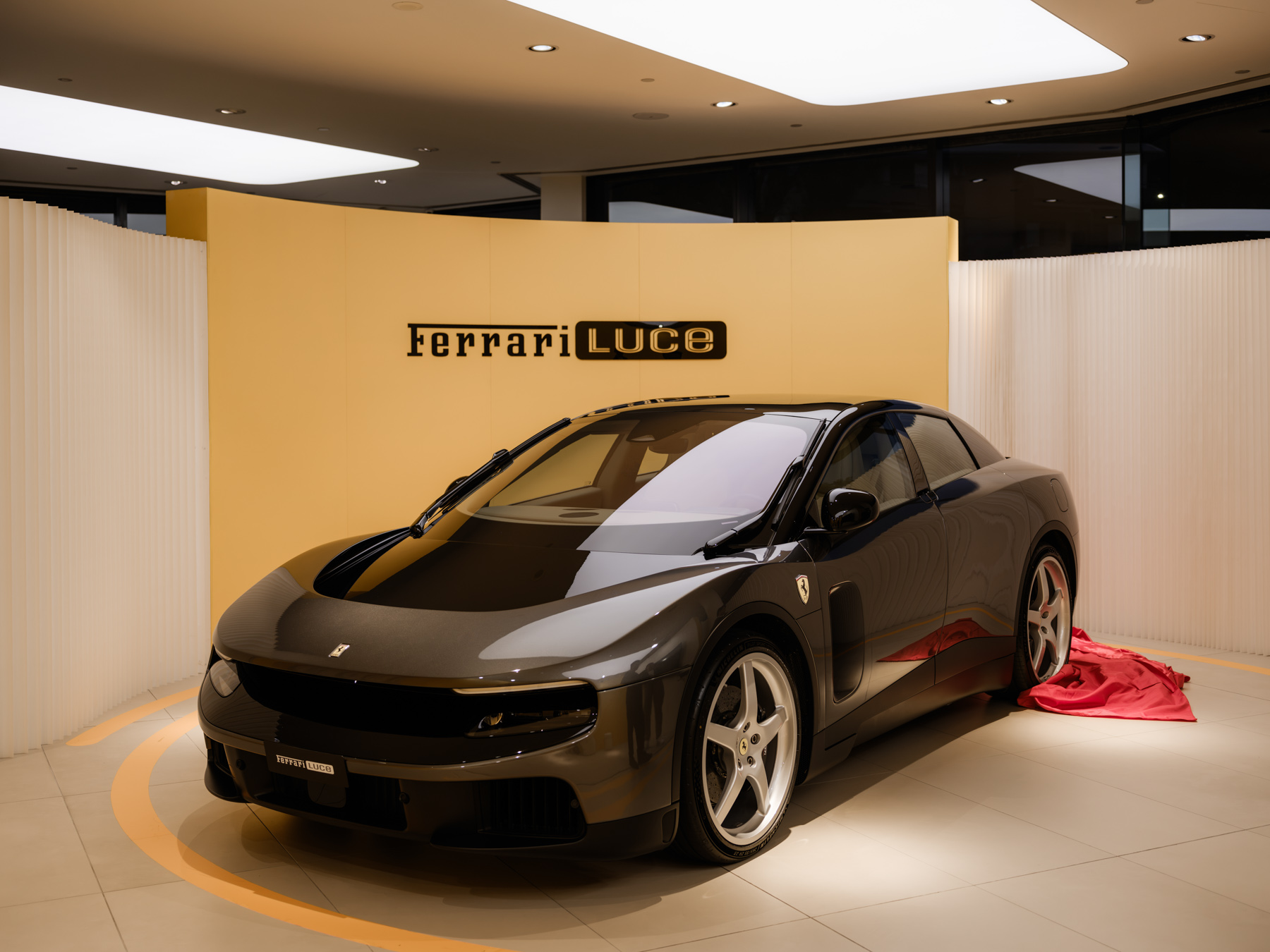
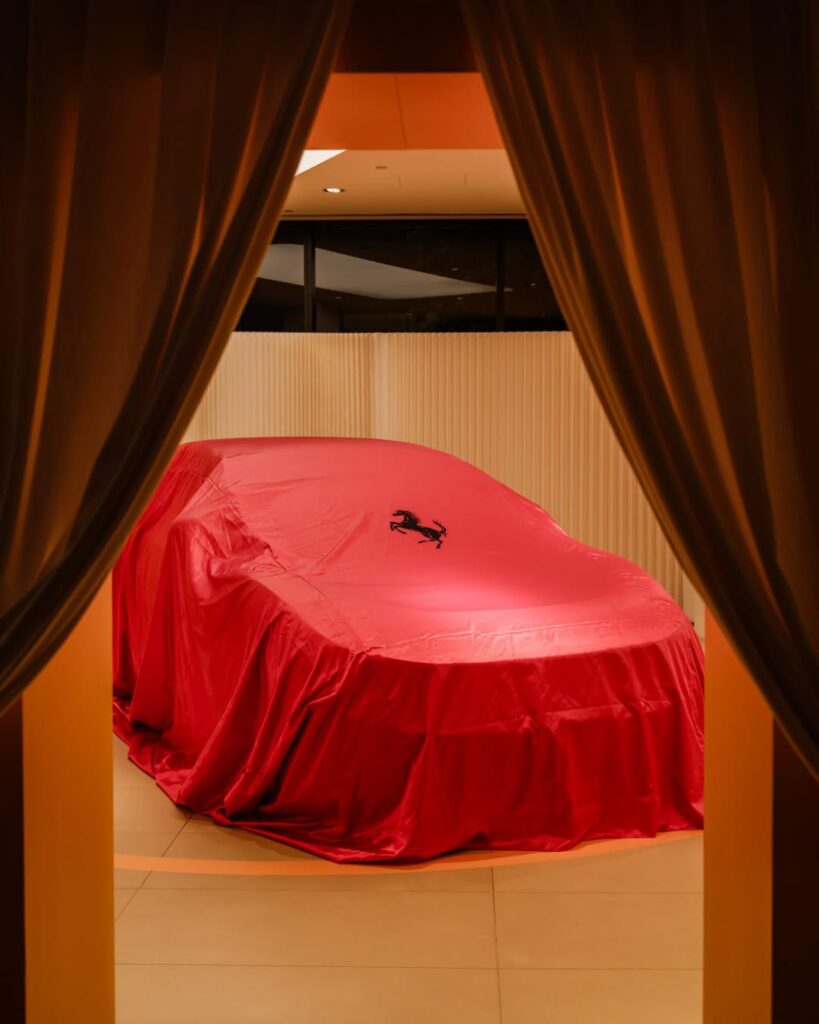
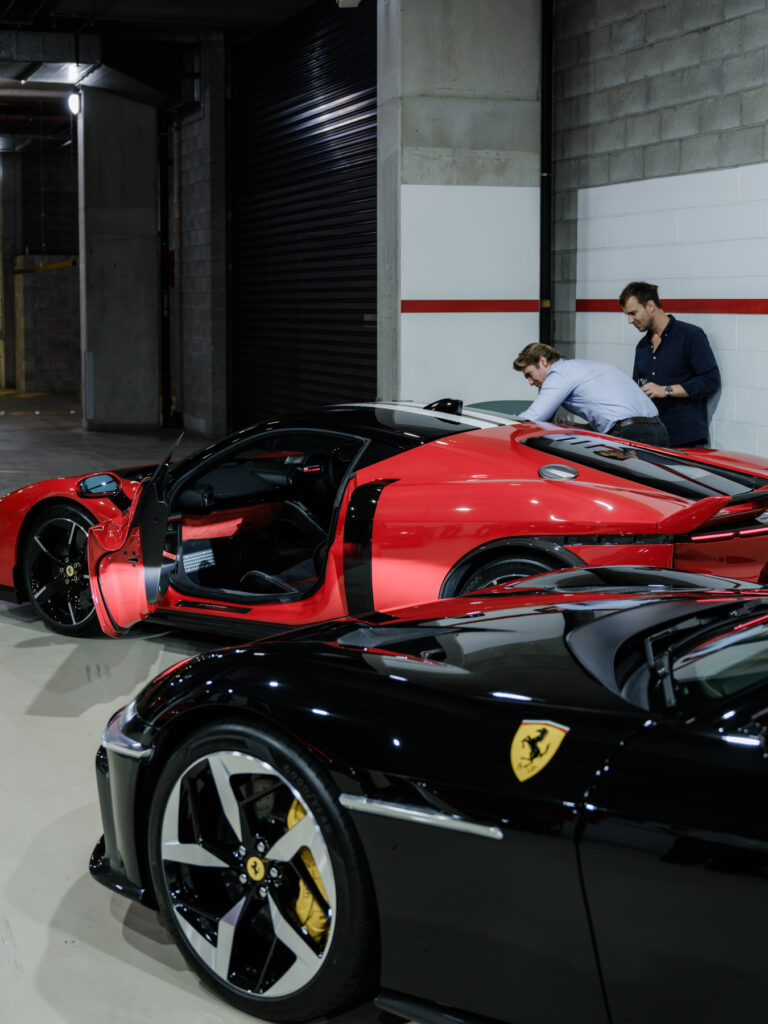
Ferrari has brought the Luce to Brisbane, marking the Australian unveiling of the marque’s first fully electric model. The event at Ferrari Brisbane in Newstead gathered people from the worlds of motoring, architecture and design around the only example of the car currently in Australia.
The Luce is a significant departure for Ferrari, but the interesting part of the story sits beyond its electric drivetrain. Developed in collaboration with LoveFrom, the creative collective founded by Sir Jony Ive and Marc Newson, the four-door, five-seat model takes Ferrari into a different design territory while keeping performance at the centre of the conversation.

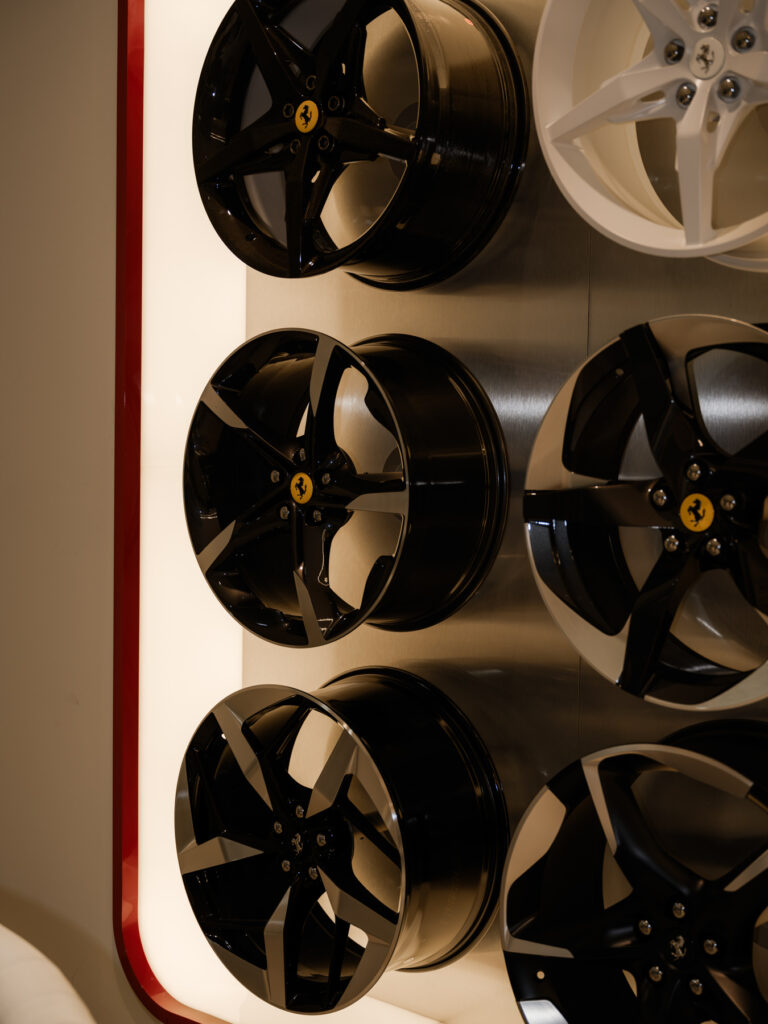
Its name means “light” in Italian, an idea reflected in the car’s approach to proportion, surfaces and movement. The Luce has a long, flowing glasshouse, rear-hinged doors and a sculpted carbon-fibre “flying bridge” forming the C-pillar. Its stance is completed by 23-inch front and 24-inch rear wheels, giving the car a substantial presence without relying on excessive visual complexity.
For the Brisbane event, guests were able to spend time with the car at close range, sitting inside the cabin and examining the materials, controls and smaller details. That physical interaction revealed one of the more deliberate choices in the Luce: Ferrari has resisted turning the interior into another screen-filled technological showroom.
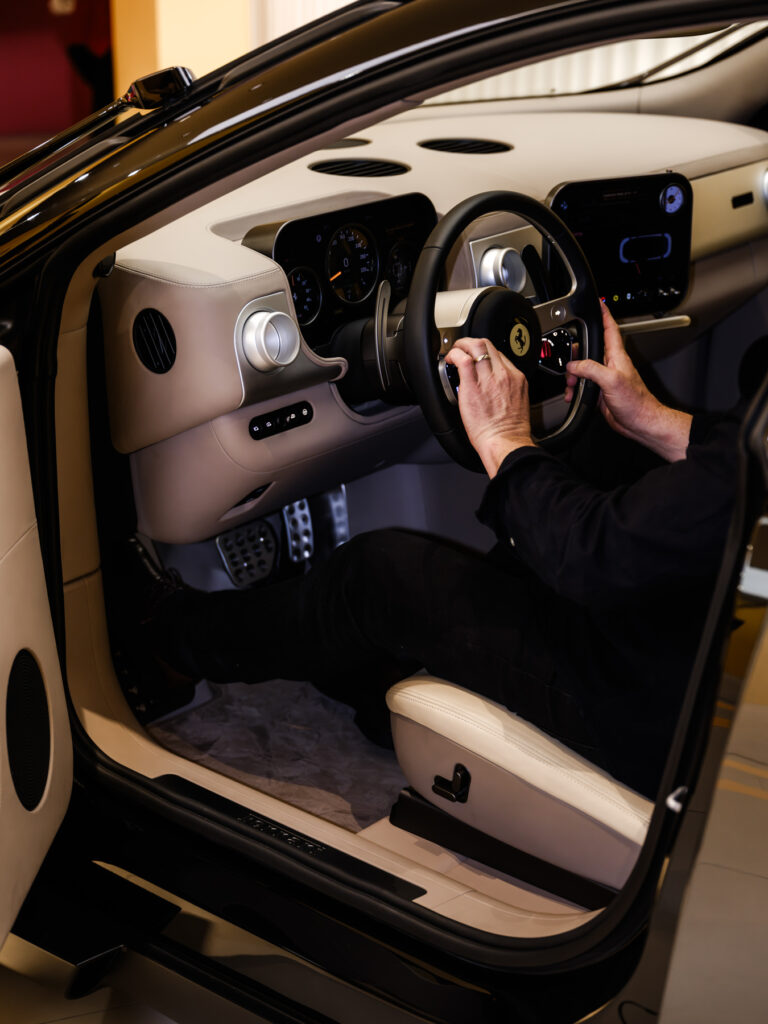
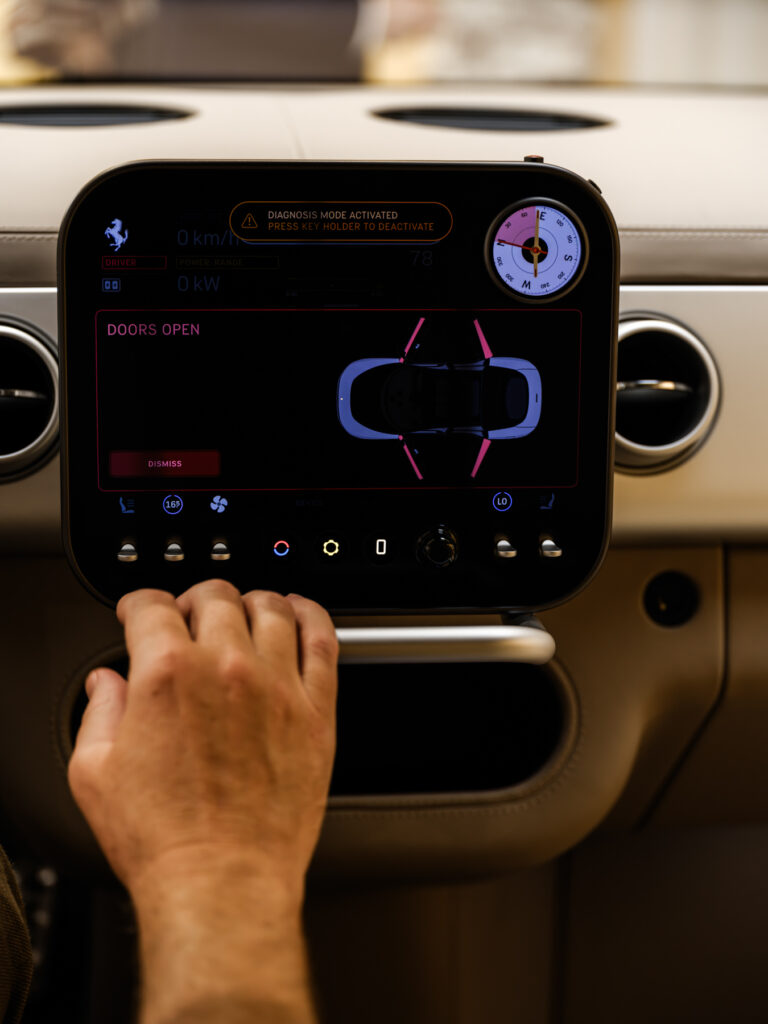
Instead, the cabin retains mechanical buttons, switches and dials alongside its digital interfaces. The decision gives the driver something physical to operate, maintaining a relationship between hand, machine and control that has become increasingly rare as new electric cars move towards increasingly simplified interfaces.
The thinking behind the car was also discussed during a panel moderated by The Local Project editor Millie Thwaites. She was joined by Michele Comelli, president of Ferrari Australasia; Harley Graham, founding director of HGA Studio; and Frank Licastro, founder and managing director of Frank Developments.

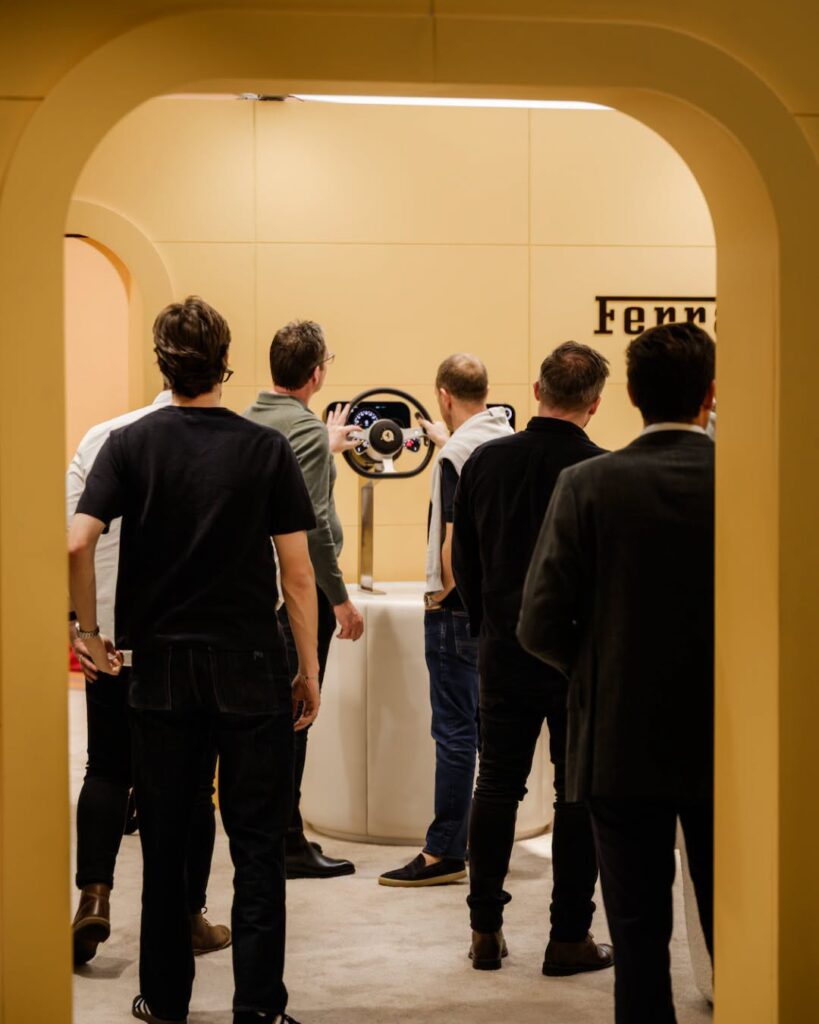
With a long career at Ferrari that has included senior positions at the company’s Maranello headquarters, Comelli spoke about the challenge of carrying the marque’s established values into an entirely electric format. The discussion also considered what LoveFrom brought to the project and how a company known for its influence on industrial design approached Ferrari’s particular history.
Graham shifted the conversation towards materials, sustainability and the human side of design, while Licastro examined the tension between commercial viability and the creation of a product people genuinely want to live with, drive and experience.
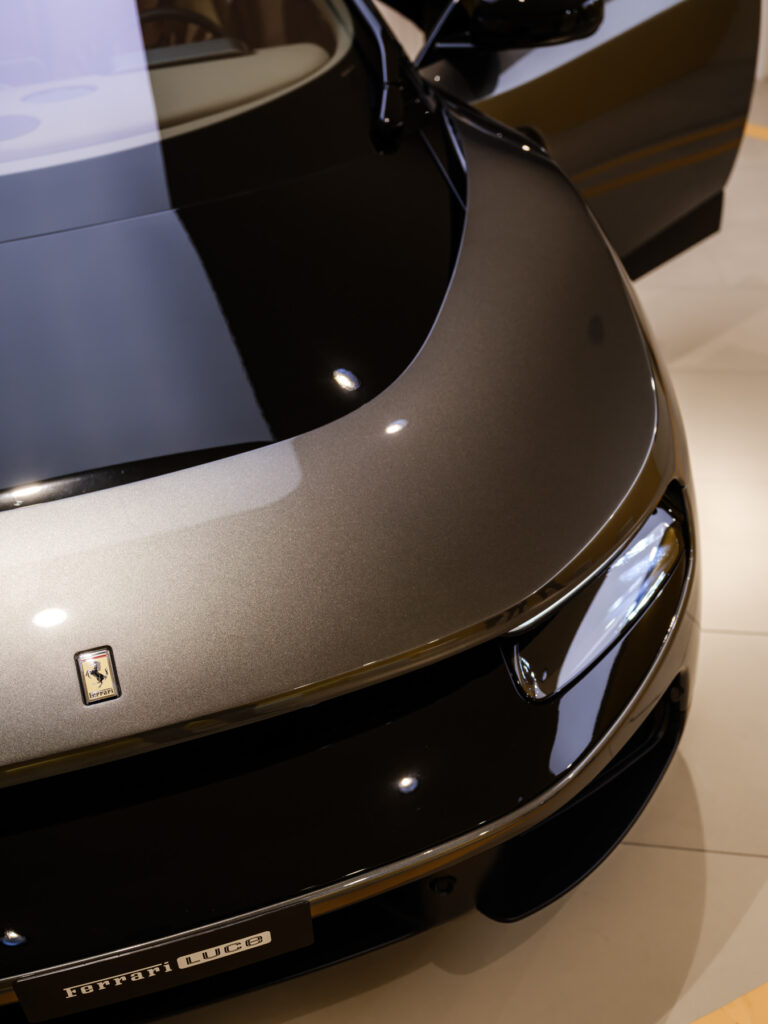
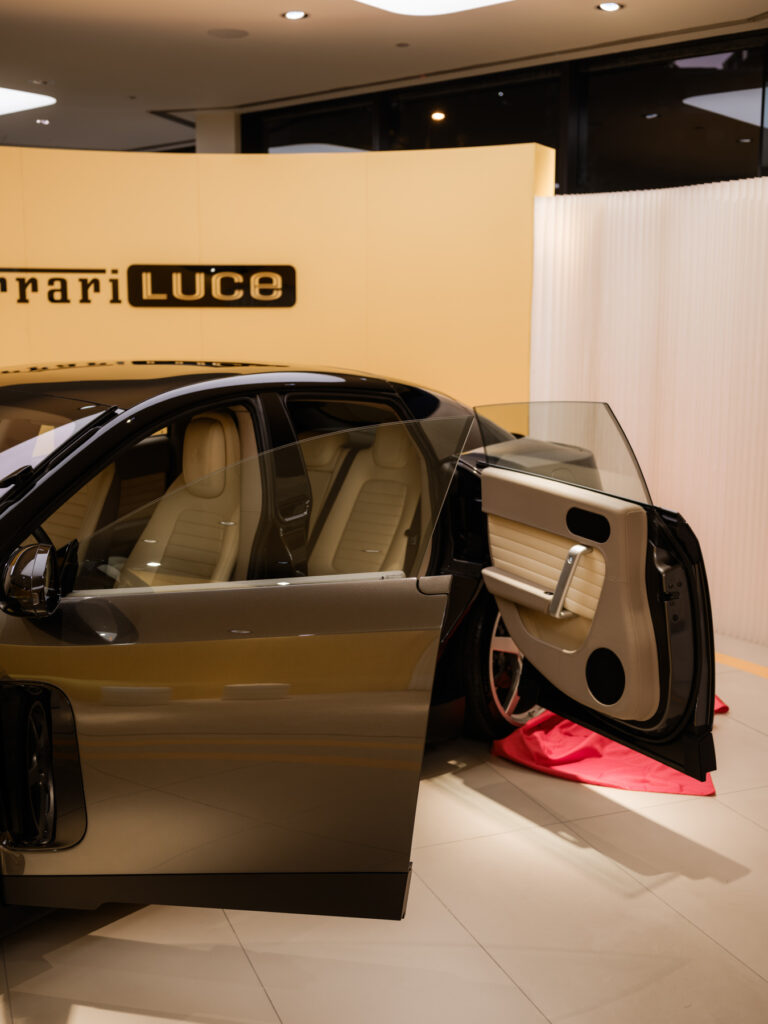
Underneath the relatively restrained exterior sits a highly complex electric system. Four motors, one for each wheel, produce up to 1,050 cv and push the Luce from 0 to 100 km/h in 2.5 seconds. A 122kW battery provides an estimated range of more than 530 kilometres.
The electric architecture is supported by advanced suspension, four-wheel steering and dedicated aerodynamic and thermal-management systems, all developed around Ferrari’s particular expectations of how a car should behave when driven hard.
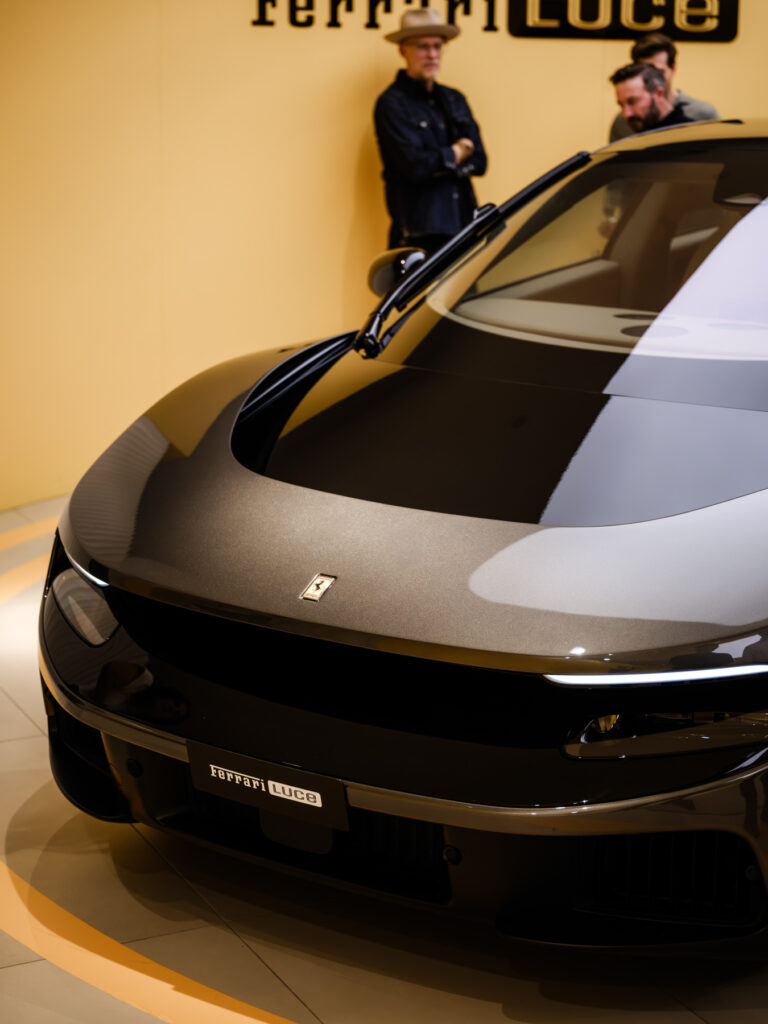
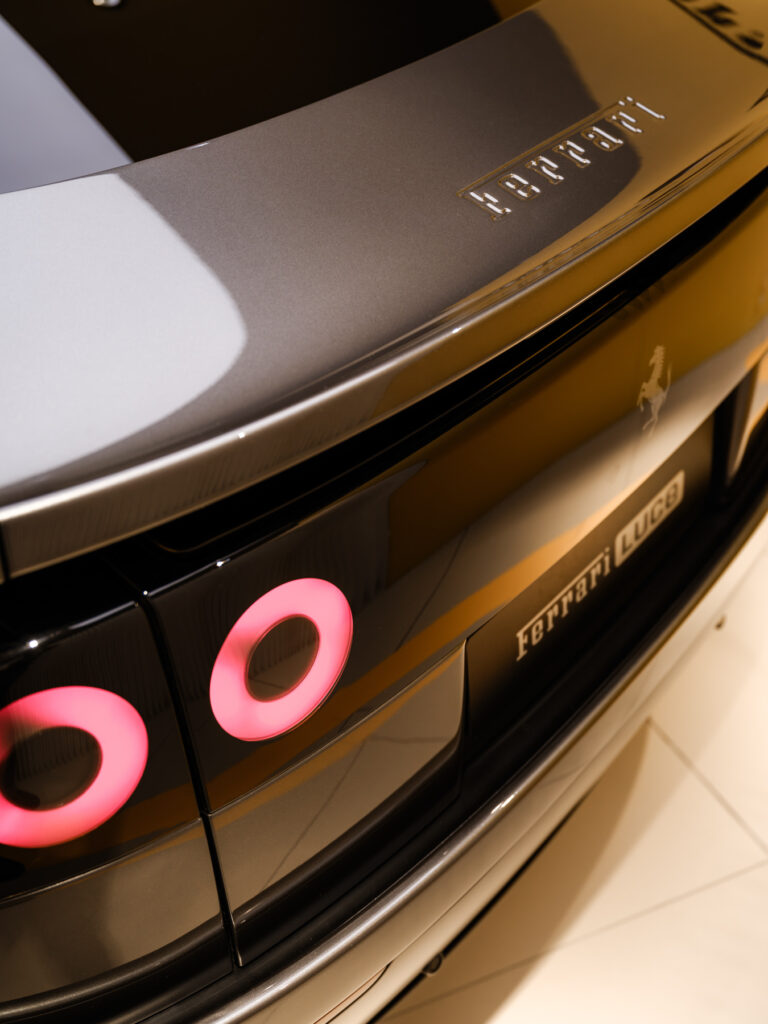
The Brisbane unveiling offered a first opportunity for Australian audiences to see that idea in physical form. With its unusual proportions, tactile interior and collaboration with LoveFrom, the Luce arrives carrying several different histories at once: Ferrari’s decades of automotive engineering, the emerging language of high-performance electric vehicles and a design partnership involving two figures whose work has shaped contemporary industrial design.
The technology may be new territory for Ferrari. The obsession with how the machine feels in your hands remains familiar.
The Luce is scheduled to become another chapter in that story, this time powered entirely by electricity.
Follow Ferrari on: Website / Facebook / Instagram
Photos by (c) Tom Blessing
