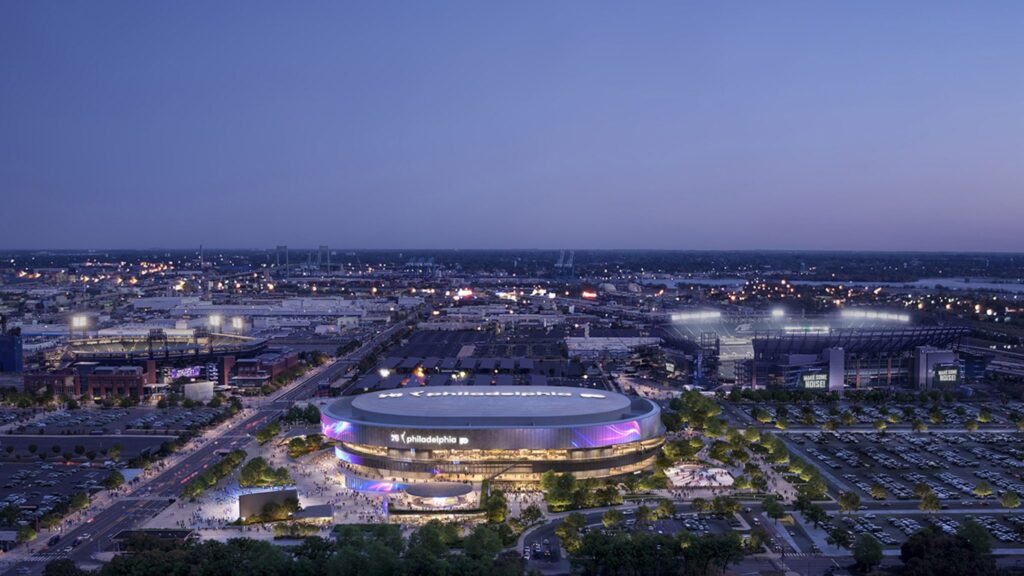
Philadelphia is getting a new arena for its biggest indoor sports teams, and its architecture starts with a building that disappeared more than a decade ago.
Designed by studios Populous and Moody Nolan, the planned venue will become the new home of the NBA’s 76ers, the NHL’s Flyers and a forthcoming WNBA team. It will replace the Xfinity Mobile Arena in the South Philadelphia Sports Complex, bringing a new major sports building to an area already defined by the city’s stadiums.

The design looks back to the Spectrum, the former Philadelphia arena that opened in 1967 and was designed by SOM. The building hosted both the 76ers and Flyers for almost three decades before being demolished in 2011. Its circular form now provides the starting point for a very different kind of arena.
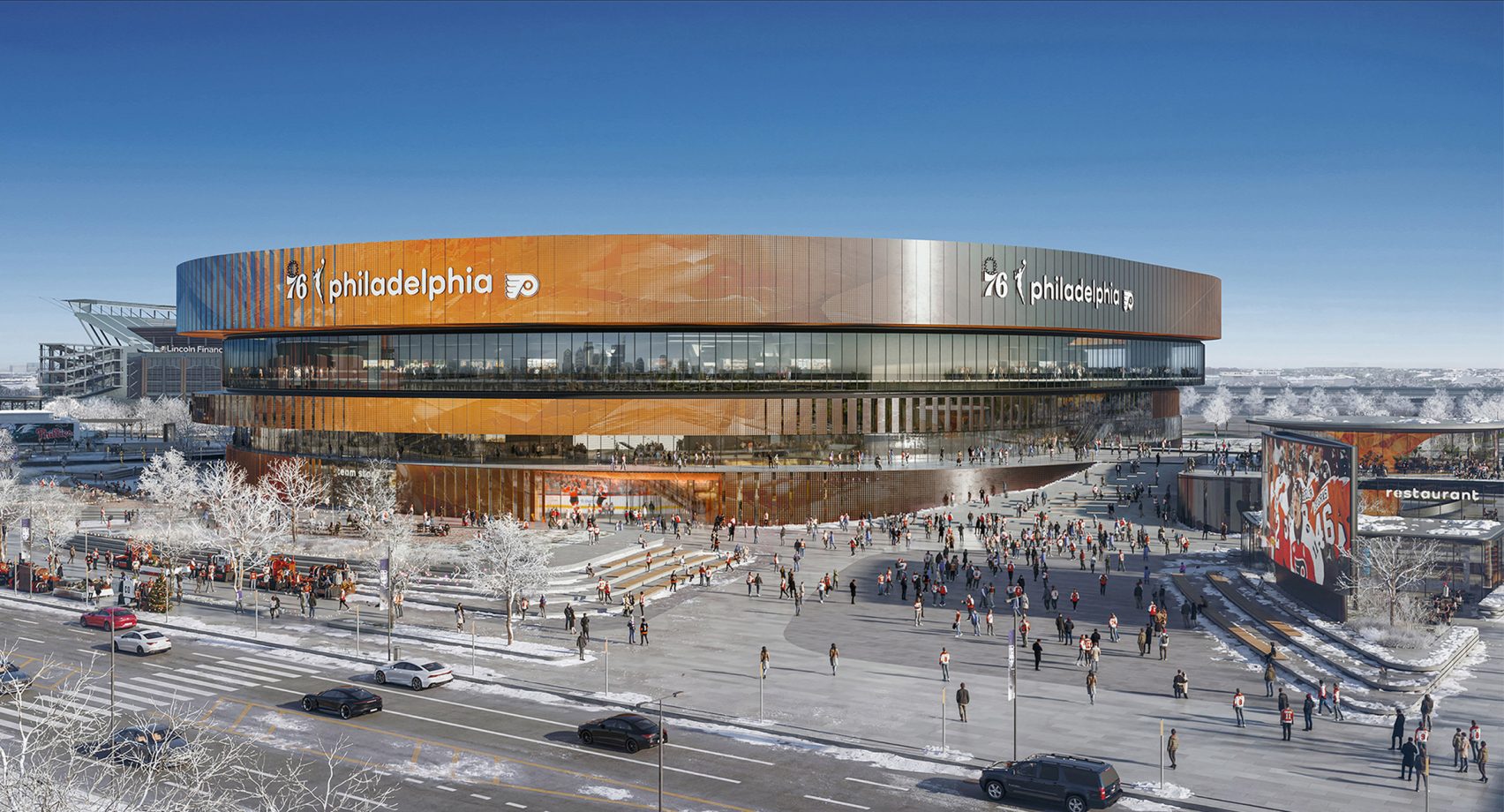
Populous and Moody Nolan have organised the new building as a series of concentric rings stacked around the central bowl. Each band is slightly offset from the one below it, creating a layered profile rather than the conventional single-volume shape associated with large sports venues.
The exterior alternates between glazed sections and large LED surfaces, allowing the building to change character according to what is happening inside and around it. The offset rings also break the mass of the arena into smaller horizontal elements, giving the structure a more fragmented silhouette when viewed from the surrounding streets.
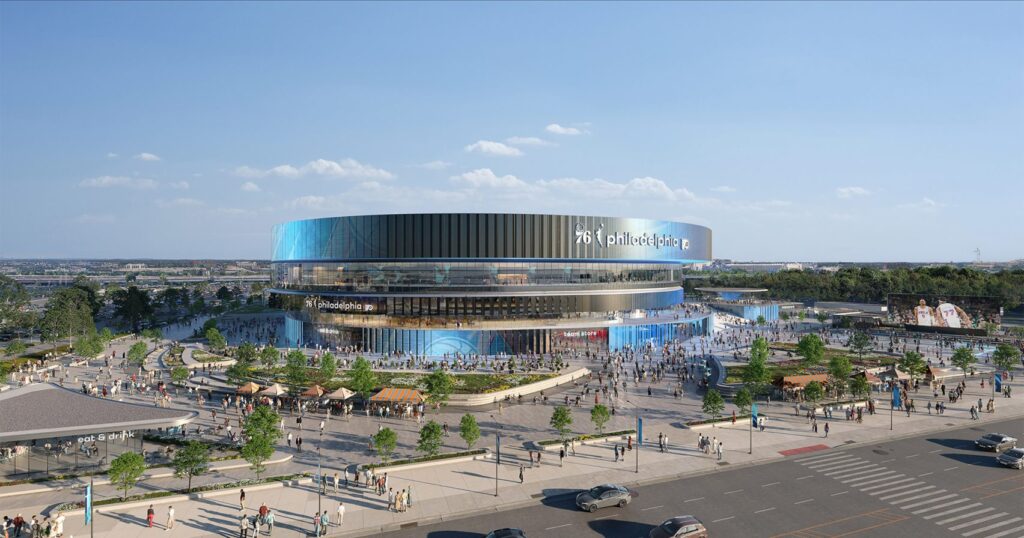
That connection to the Spectrum is central to the project. The teams describe the new arena as a continuation of Philadelphia’s sports history, taking the geometry of a former gathering place and translating it into a building intended for the next generation of audiences.
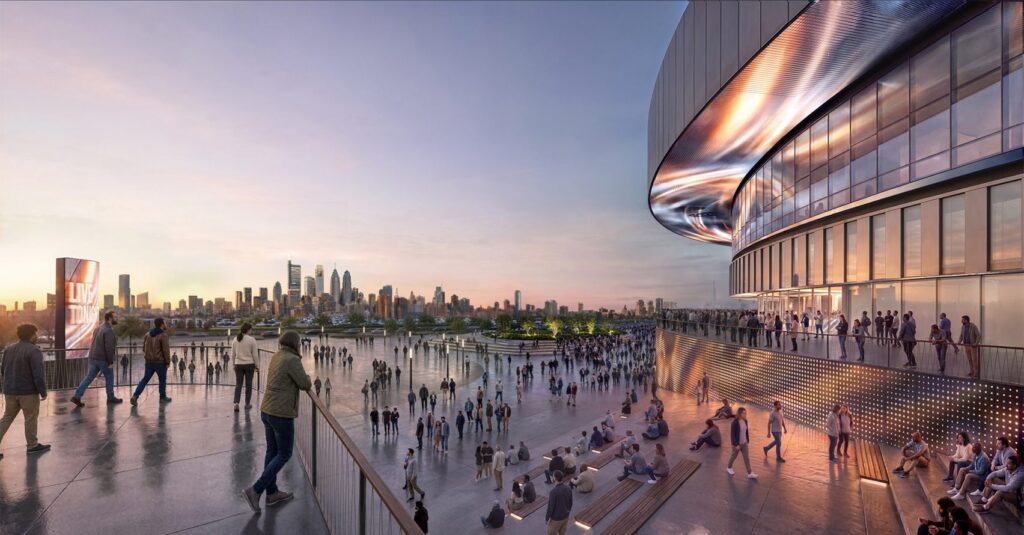
The surrounding public space will be an important part of that experience. Plans currently include roughly half an acre of outdoor space with restaurants and active public areas, creating somewhere to spend time before and after events rather than treating the arena as a destination that begins at the entrance doors.
The entry sequence is expected to play a particularly visible role. Large stairways leading towards the building take cues from some of Philadelphia’s most recognisable public spaces, including the steps of the Philadelphia Museum of Art, bringing a familiar civic gesture into the sports complex.
The final configuration of the plaza is still being developed, with fan feedback expected to influence elements of the outdoor programme.
Beyond its sporting role, the project carries considerable financial and civic significance. Harris Blitzer Sports & Entertainment, owners of the 76ers, and Comcast Spectacor, which owns the Flyers, describe the development as the largest fully privately funded project in Philadelphia’s history.
The arena is therefore being asked to do several things at once: provide new homes for three professional teams, reconnect contemporary Philadelphia with a demolished piece of its sporting memory and create another public destination within South Philadelphia.
Its most recognisable gesture comes from the past. Its ambition belongs to the future.
If completed as planned, the new arena will add another large-scale piece to Philadelphia’s sports landscape while giving the city a building whose circular form carries a very specific memory: the Spectrum, returned in a new shape.