
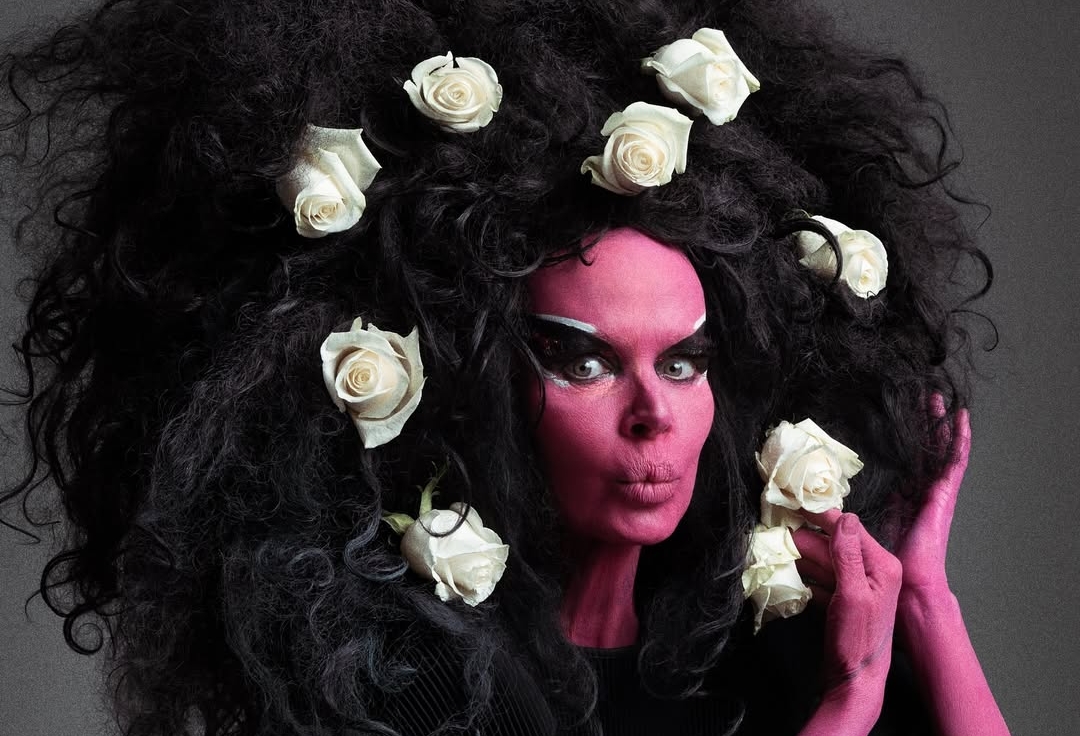
Kembra Pfahler is the subject of a new monograph that traces four decades of one of contemporary culture’s most uncompromising artistic careers. Published by Rizzoli, the book offers an expansive look at Pfahler’s work through archival photography, performance documentation, illustrations, and visual ephemera, mapping the evolution of an artist whose practice has consistently existed at the intersection of punk, performance, shock aesthetics, and radical self-invention.
Long regarded as a singular figure in underground art and music culture, Pfahler has built a visual identity that is deliberately confrontational and impossible to ignore. Her work frequently dismantles conventional ideas of femininity, beauty, sexuality, and performance through exaggerated physical transformation, ritualized imagery, and a visual language that merges fetish iconography with horror, theatricality, and subcultural rebellion. Blackened teeth, painted skin, partial nudity, and bodily distortion have become recurring elements in a practice that treats the body as both medium and provocation.
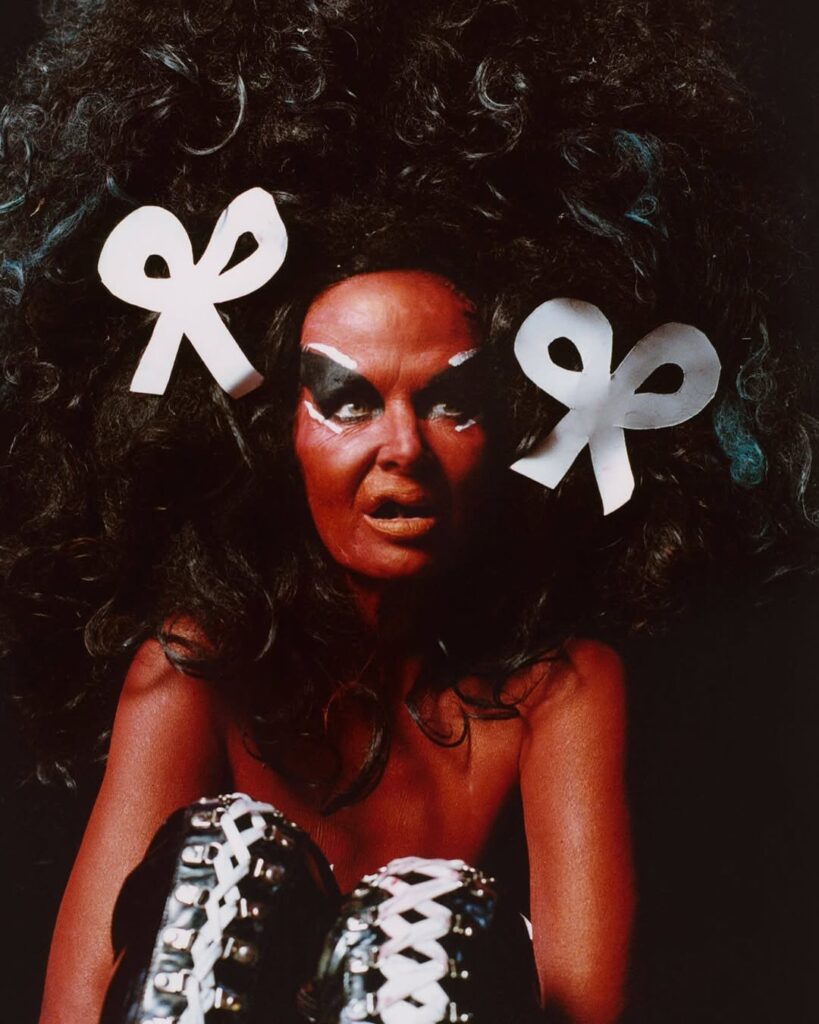

The publication follows Pfahler’s trajectory from her arrival in New York’s downtown underground scene during the 1980s, documenting her emergence within the Cinema of Transgression movement, a radical filmmaking circle known for its anti-establishment energy, transgressive content, and rejection of mainstream artistic norms. During that formative period, Pfahler navigated the city’s underground culture while working professionally as a dominatrix, an experience that further informed the aesthetics and power dynamics embedded throughout her work.
Her creative output has always resisted categorization. Alongside visual art and performance, Pfahler founded and fronted The Voluptuous Horror of Karen Black, a glam-punk performance band that fused horror theatrics, music, and body-based spectacle into a cult phenomenon. That same spirit of excess and disruption carried into her later gallery practice, where live performance gradually evolved into installations, endurance-based works, and sculptural interventions.
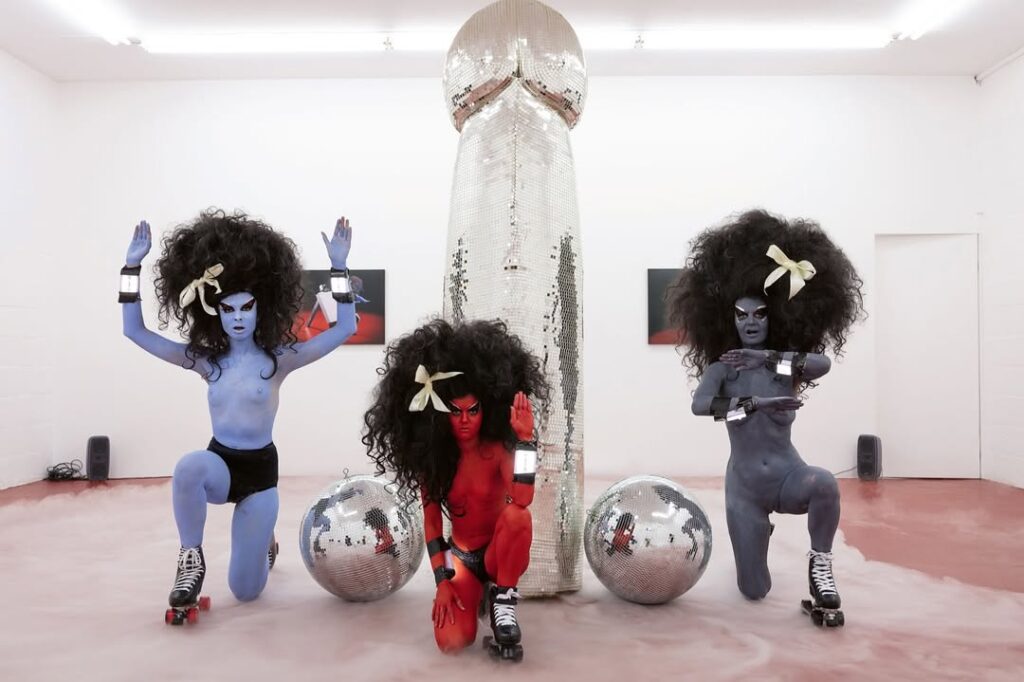
By the 1990s and early 2000s, her work found greater visibility within institutional and commercial art spaces, with galleries such as The Hole and Jeffrey Deitch embracing her hybrid approach. Projects ranging from her well-known body-imprint works to physically demanding live performances expanded her visual vocabulary while maintaining the same confrontational intensity. Her influences remain unusually wide-ranging, spanning Japanese theatrical traditions, underground cinema, fetish culture, and distinctly American subcultural references.
Pfahler’s influence also extends beyond the art world, where her aesthetic has resonated deeply with fashion culture. Designers including Marc Jacobs, Rick Owens, and Helmut Lang have long engaged with her visual language, while more recent collaborations with brands such as Supreme reaffirm her continued relevance across creative disciplines.
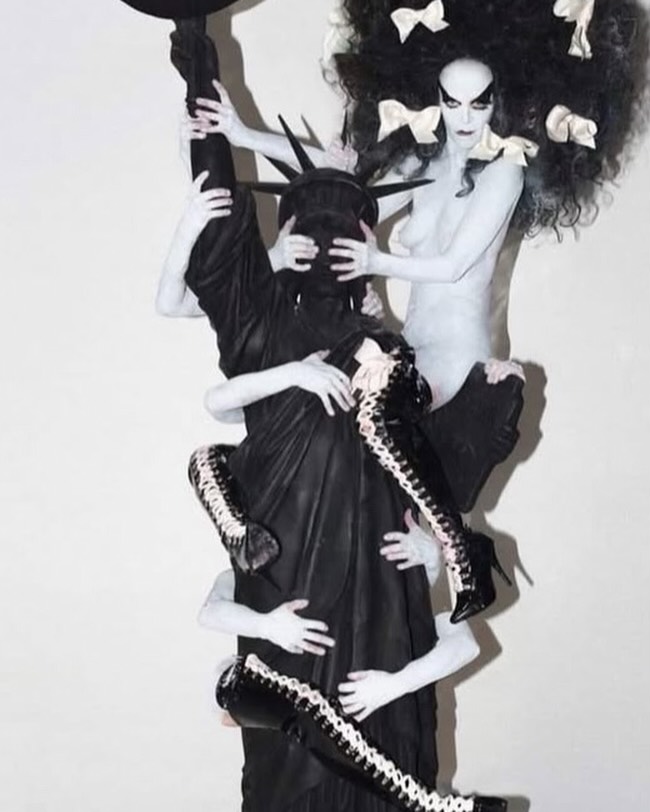

More than a retrospective, the book functions as a portrait of artistic defiance, a record of a career built not around acceptance, but around deliberate disruption.
Follow Kembra Pfahler on: Instagram
Photos by Zoe Chait / Plastiques / Inezandvinoodh
