
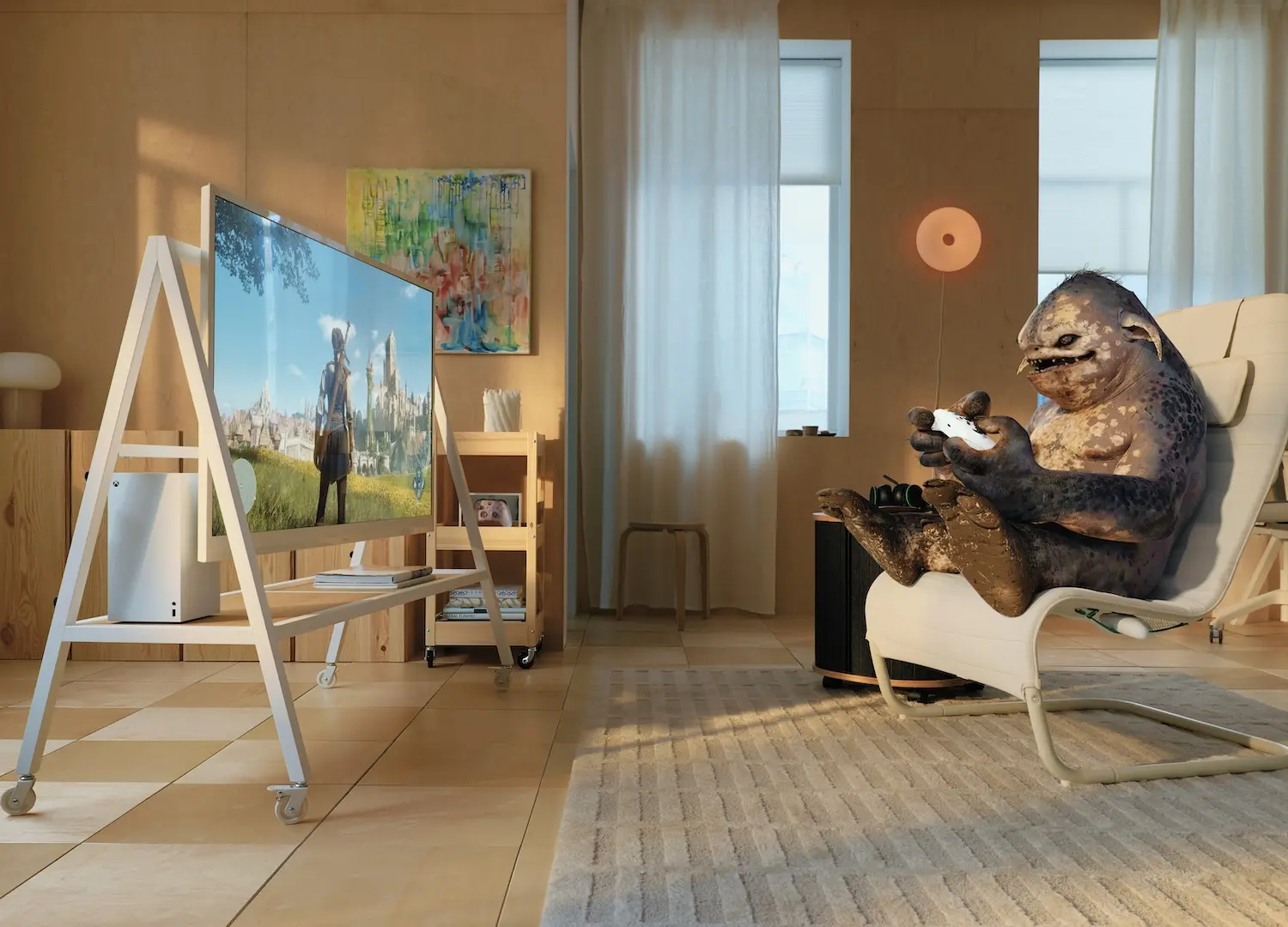
Gaming has spent enough time being treated as something that happens in one particular corner of the house. IKEA and XBOX are moving it elsewhere.
Their new YXSTABY collection looks at gaming through the ordinary objects that surround it: a TV stand, a laptop stand, a wheeled side table, a monitor stand and a stool. Designed for people who might play, work, watch something and have dinner within the same stretch of floor, the collection treats gaming as part of domestic life rather than an activity that needs its own sealed-off territory.
There is an amusing reversal behind the idea. Digital worlds have been borrowing from physical design for years. In The Sims, a long-standing obsession among architects and designers, and in Animal Crossing, recognisable pieces from design history have appeared in virtual interiors, with references to figures such as Le Corbusier, Philippe Starck and the Castiglioni brothers finding their way into pixelated homes.
YXSTABY turns that relationship around. This time, the physical world is taking cues from gaming.
The collection emerged from a straightforward shift in behaviour. Gaming has become embedded in the routines of adults who grew up with consoles, PCs and increasingly connected homes. The setup itself has changed along the way. A screen might serve a game in the afternoon and a film at night; a dining table can become a workstation before turning into a place for multiplayer sessions; a sofa can accommodate a controller, a laptop, a headset and whatever else happens to be within reach.
“The way people play at home has changed. Gaming today is also about relaxing and spending time with others, not just focusing on the game, and this changes what we expect from our domestic spaces,” says Philip Dilé, Product Design Developer at IKEA Sweden. “XBOX knows what gamers need from their gaming setup and how to solve the small problems that arise when that setup has to adapt to everyday life at home.”
That idea shaped the collaboration between IKEA and XBOX, with designers from both sides working in pairs on individual pieces. Instead of creating furniture that exists solely for gaming, they focused on objects already familiar inside the home and adjusted them around the rituals, clutter and small inconveniences that come with playing.
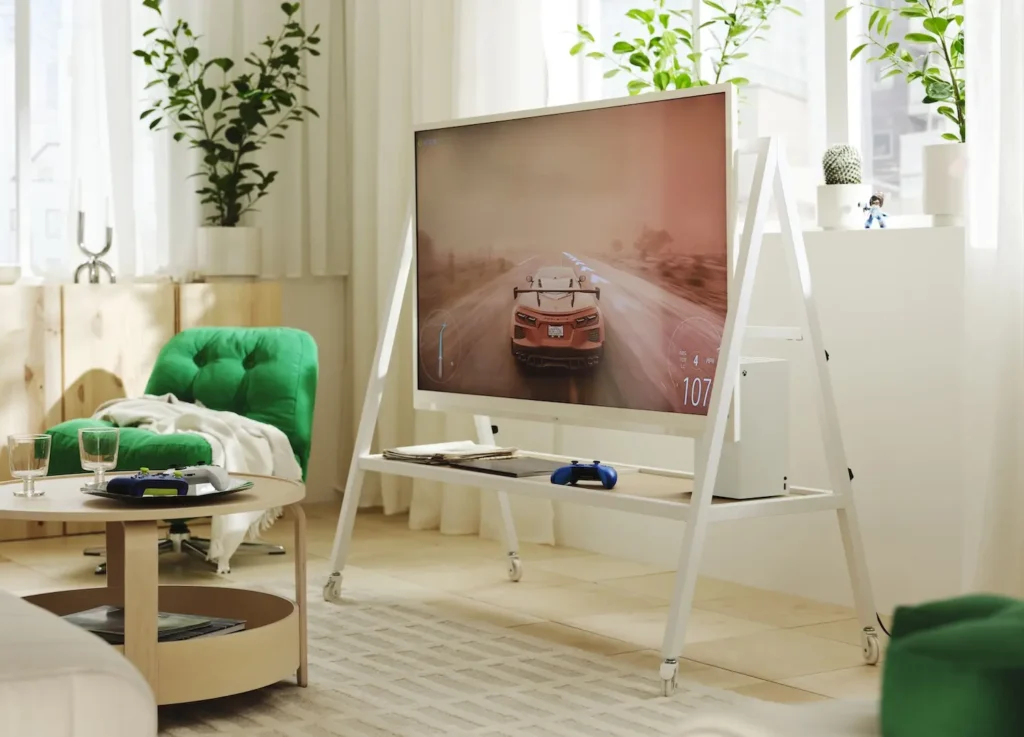
The TV stand is a good example. It is IKEA’s first mobile TV stand, fitted with wheels so it can move between rooms when the arrangement changes. A compartment at the back conceals gaming equipment, allowing controllers and other hardware to disappear once the session is over.
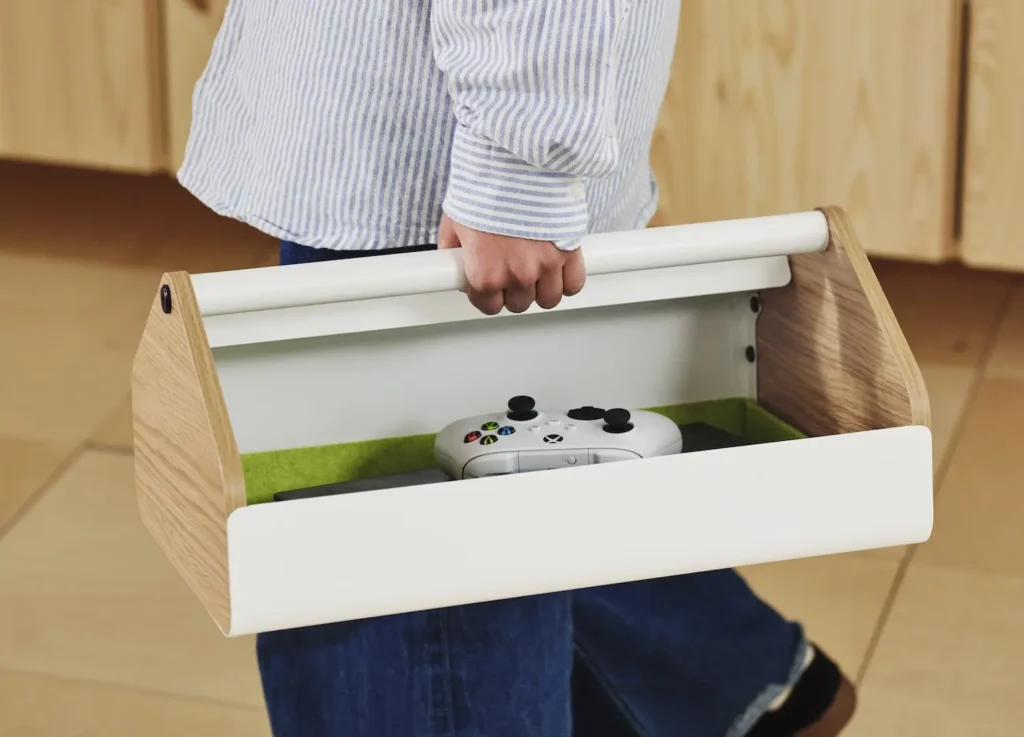
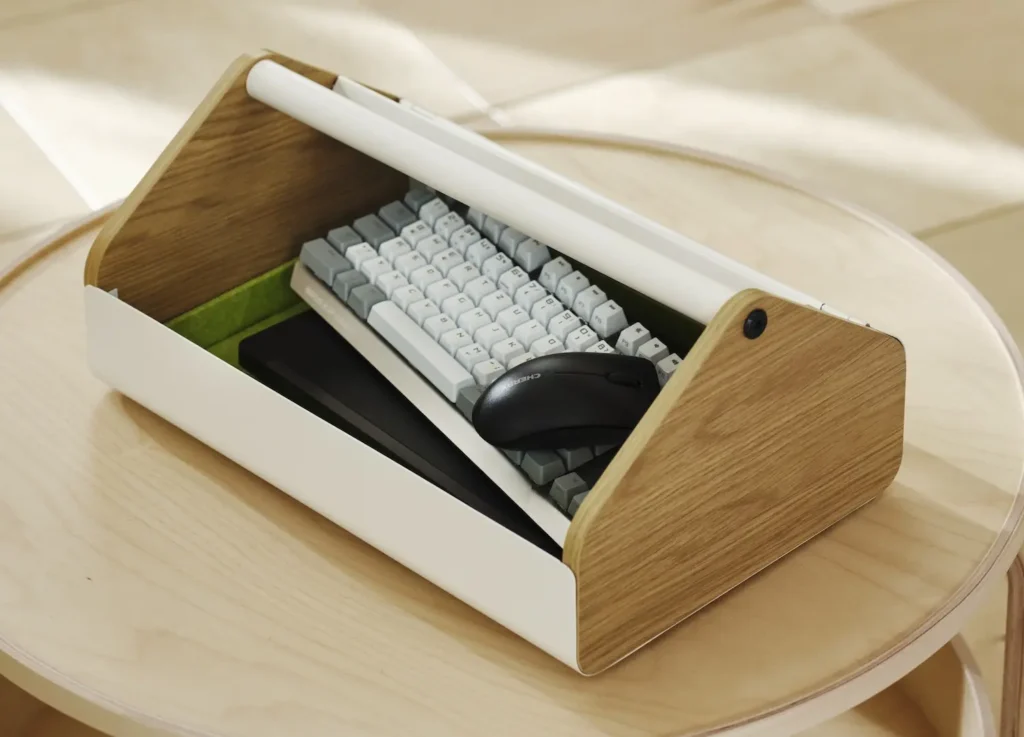
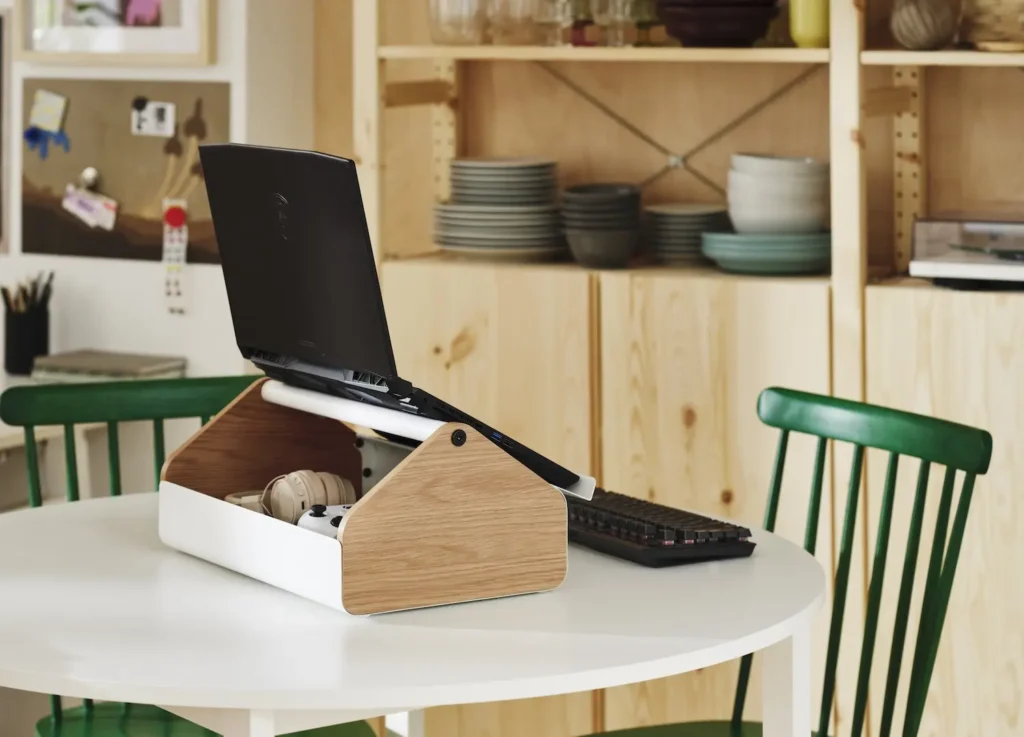
The laptop stand addresses a different kind of domestic improvisation. For anyone without a dedicated gaming room, it can turn a dining table, desk or other surface into a temporary setup. Its built-in storage keeps controllers, cables and accessories in one place, while the lid doubles as a laptop support.
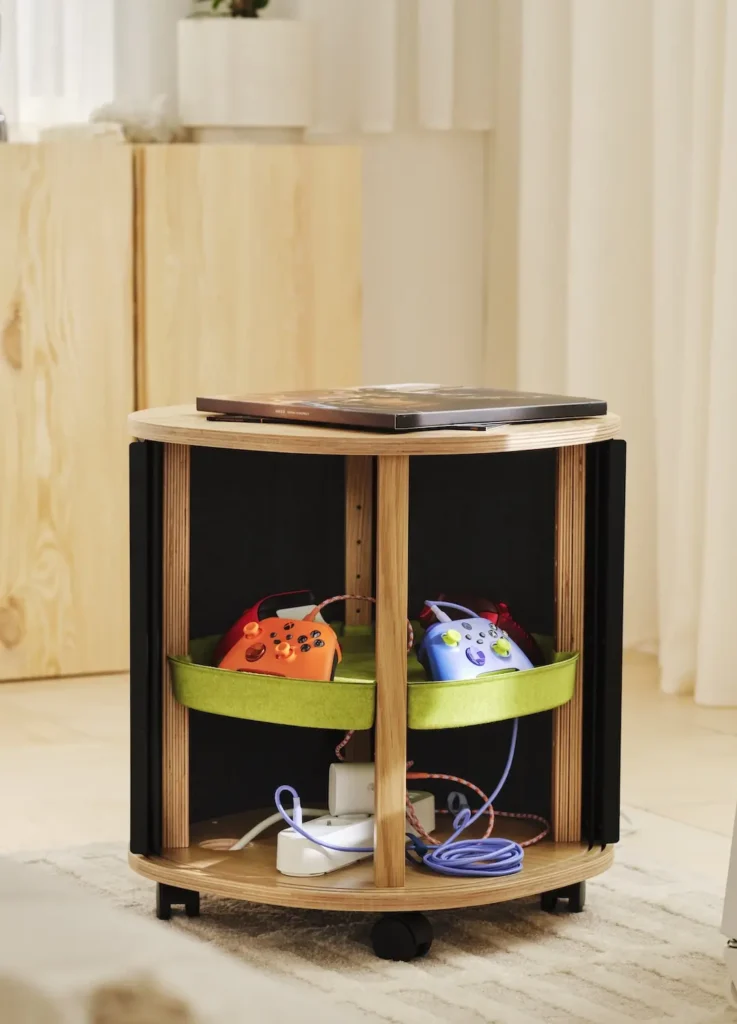
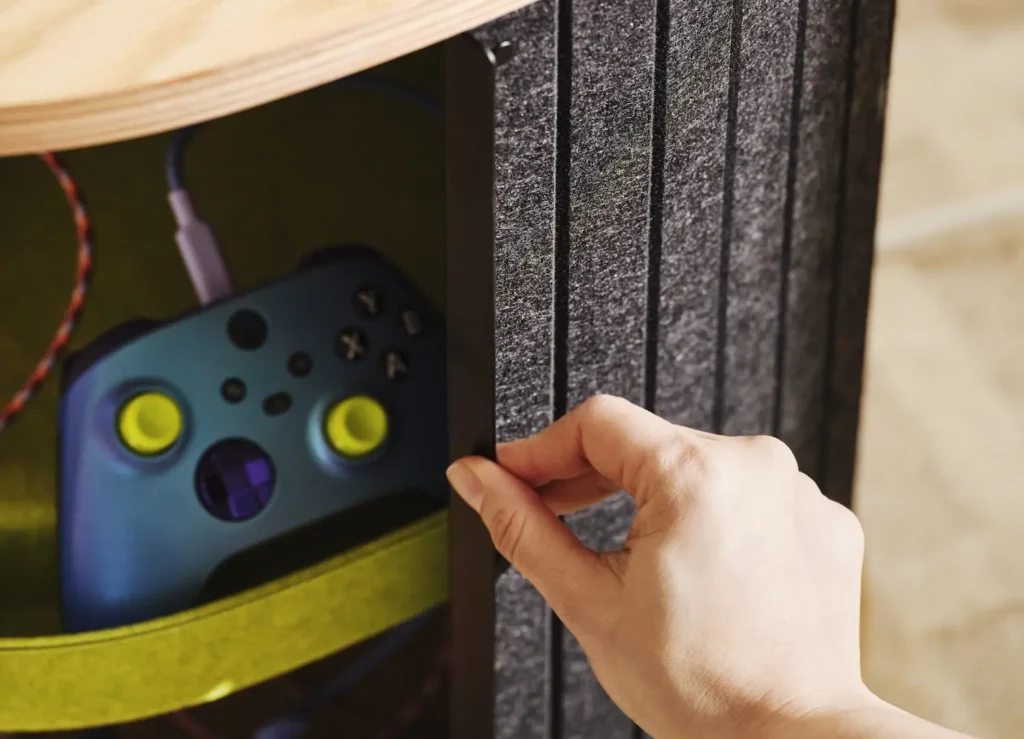
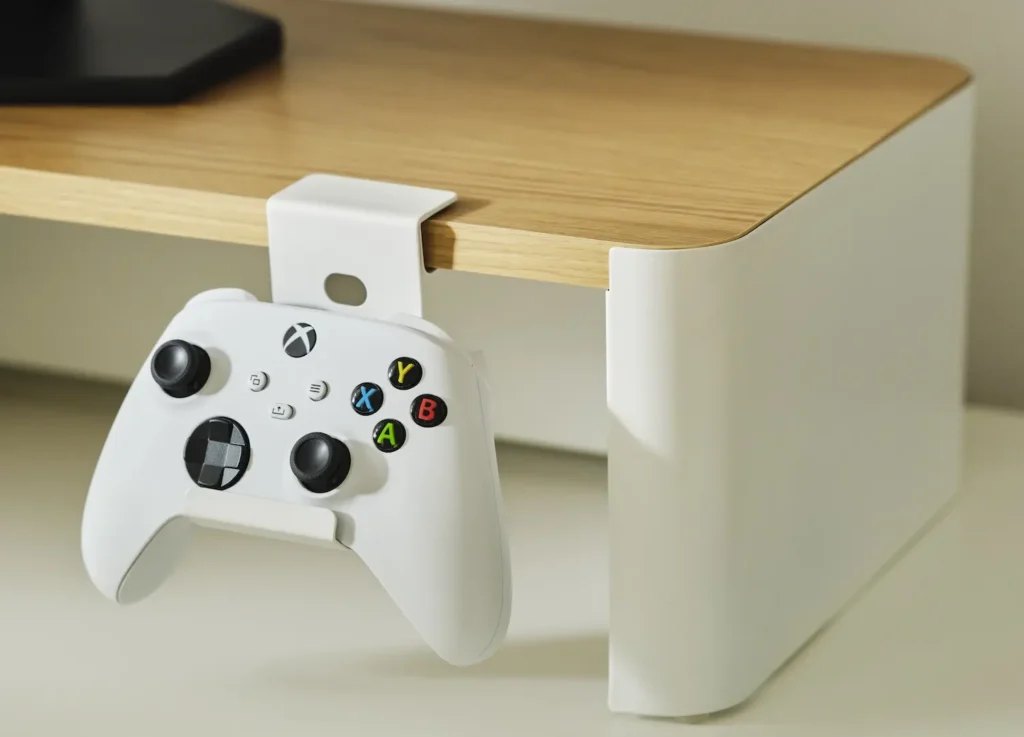
Then there is the wheeled side table, designed around the familiar problem of having nowhere sensible to put a controller. It can roll alongside a sofa or chair and includes a surface for gaming equipment, while sliding doors conceal a charging area. The monitor stand works on a similar principle, lifting one or two screens to a more comfortable position and adding dedicated spaces for a phone, headphones and controllers.
The collection becomes more playful when XBOX’s visual language enters the picture.
The controller is treated as a source of shapes, textures, colours and gestures rather than an object to be reproduced at furniture scale. Green appears throughout YXSTABY as a functional accent, marking pockets, compartments and storage areas. Black, white and beige keep the pieces grounded in the wider language of the home, allowing the gaming references to sit quietly within a living room, bedroom or workspace.
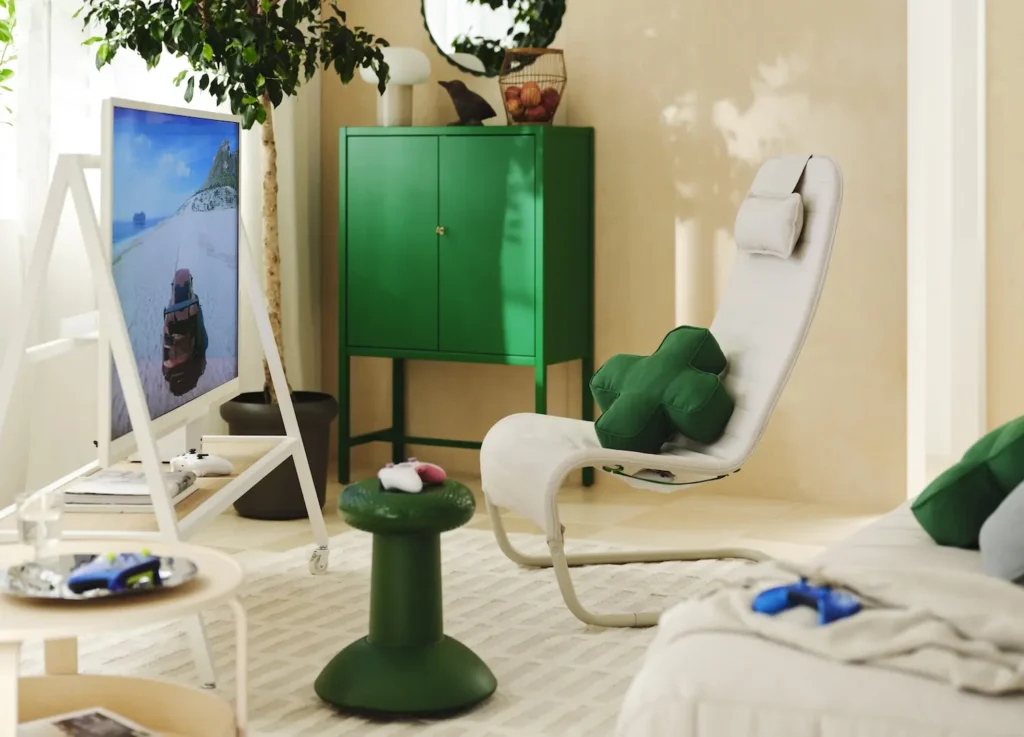
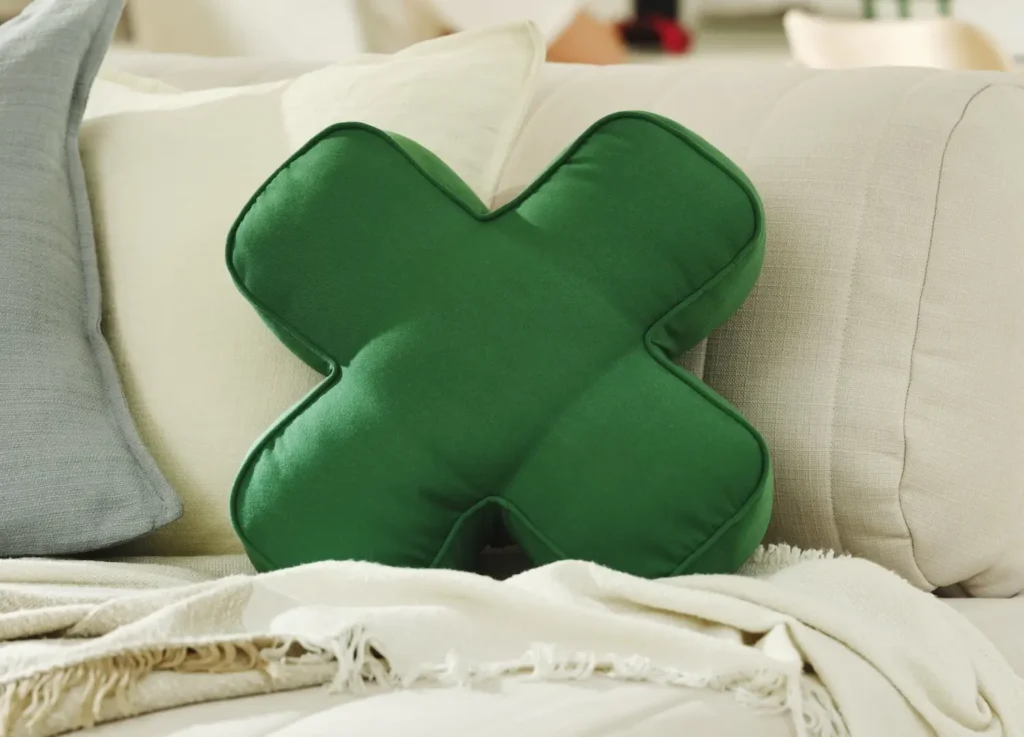
Some details are more recognisable. The D-pad appears in the geometry of a cushion and in a polished stainless-steel decorative dish. A mirrored display stand gives the controller a place of its own, reflecting it from multiple angles alongside figurines and collectibles.
The stool takes the reference much further.
Its form originates from the thumbstick of an XBOX controller, developed using the original 3D design files supplied to the IKEA team. The result retains the distinctive rounded profile of the gaming component while translating it into something with a very different job. The curve becomes a seat, while the textured surface of the original grip is retained as part of the stool’s stability.
For IKEA designer David Wahl, the object carries a personal history as well.
“25 years ago, I spent the whole night in line to get my hands on the first XBOX console,” he says. “So working with these shapes also had a personal and nostalgic dimension for me.”

The design challenge was considerably less nostalgic: turning a thumbstick into a piece of furniture that could actually be sat on. The curvature had to support the body, the base had to remain stable, and the recognisable character of the controller part had to survive the transformation. Even its movement retains something from the original object, with the stool tilting when weight shifts across it.
That translation says something about the audience YXSTABY is designed for.
For millennials who grew up during the rapid evolution of home computers and consoles, gaming has travelled from childhood into adult life without disappearing along the way. The difference is that the surroundings have changed. The dedicated bedroom setup has given way to apartments where the same table may host a laptop in the morning, dinner in the evening and a game at night.
The pandemic accelerated that rearrangement. Domestic interiors suddenly had to absorb offices, classrooms, gyms, cinemas and social spaces, often without gaining any additional square metres. The result was a home organised around overlapping activities rather than fixed rooms with single purposes.
Furniture had to follow.
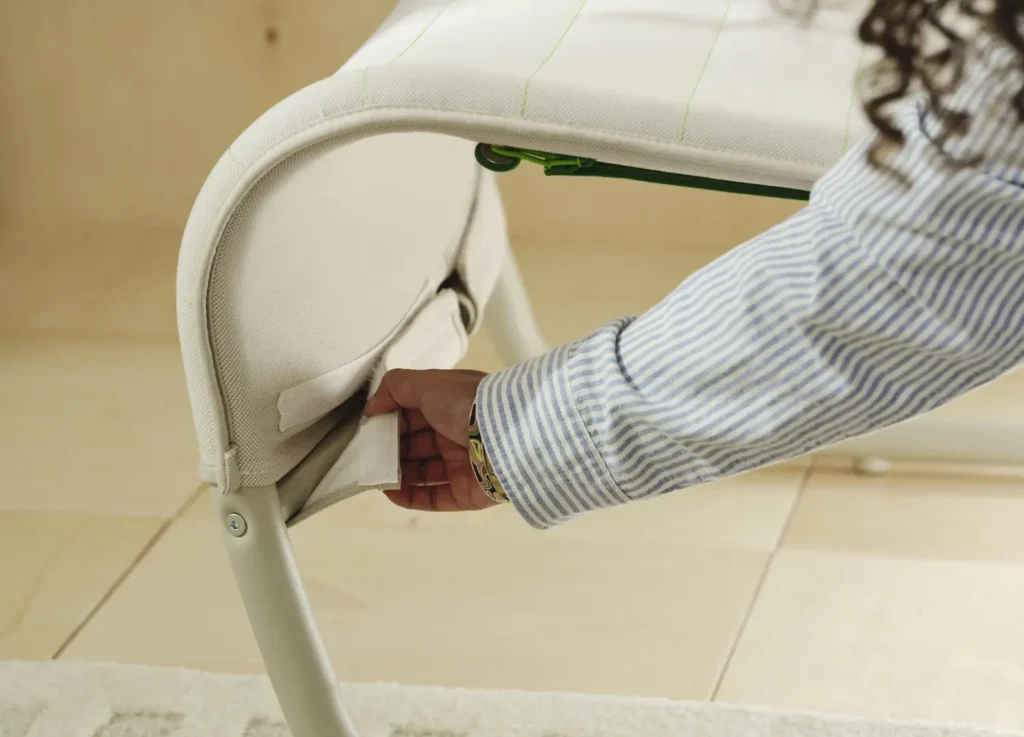
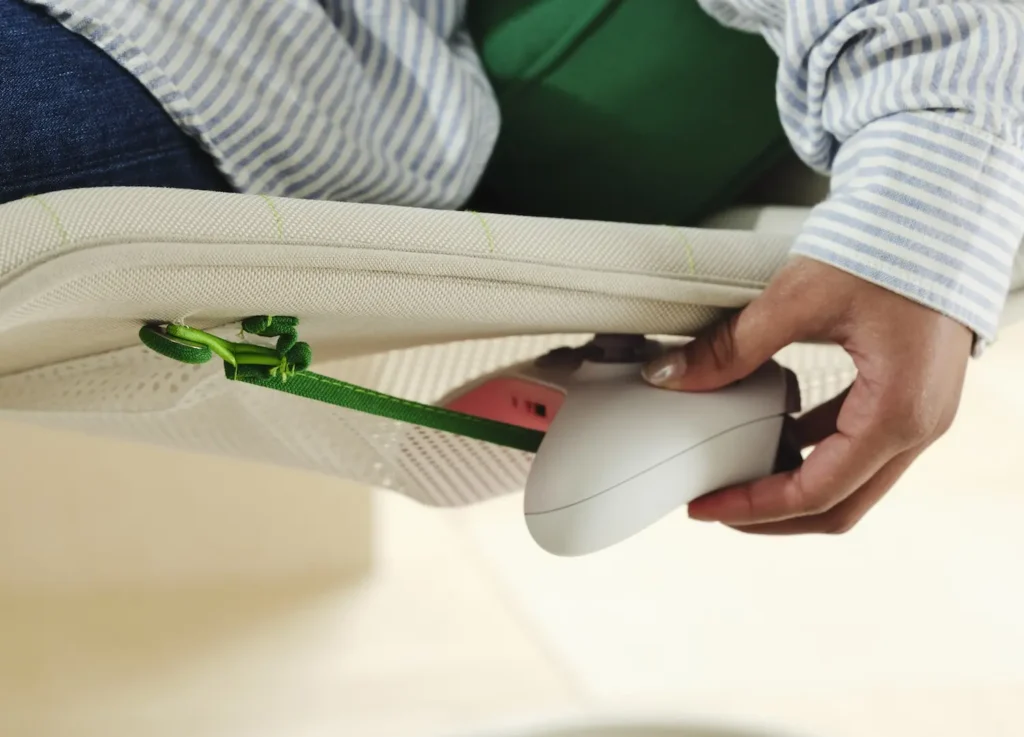
YXSTABY belongs to that shift. Its objects acknowledge the practical messiness of contemporary routines: equipment needs somewhere to go, screens need to move, cables need hiding, controllers need charging, and temporary setups need to appear and disappear without turning the room into a permanent gaming station.
That makes the collection less about decorating a home with gaming references and more about accepting gaming as one of the things people already do there.
The XBOX controller supplies the visual vocabulary. IKEA supplies the domestic grammar. Somewhere between the two sits YXSTABY: a collection built around the small negotiations between technology, furniture and everyday life, where a gaming setup no longer needs to announce itself as a separate world.
