
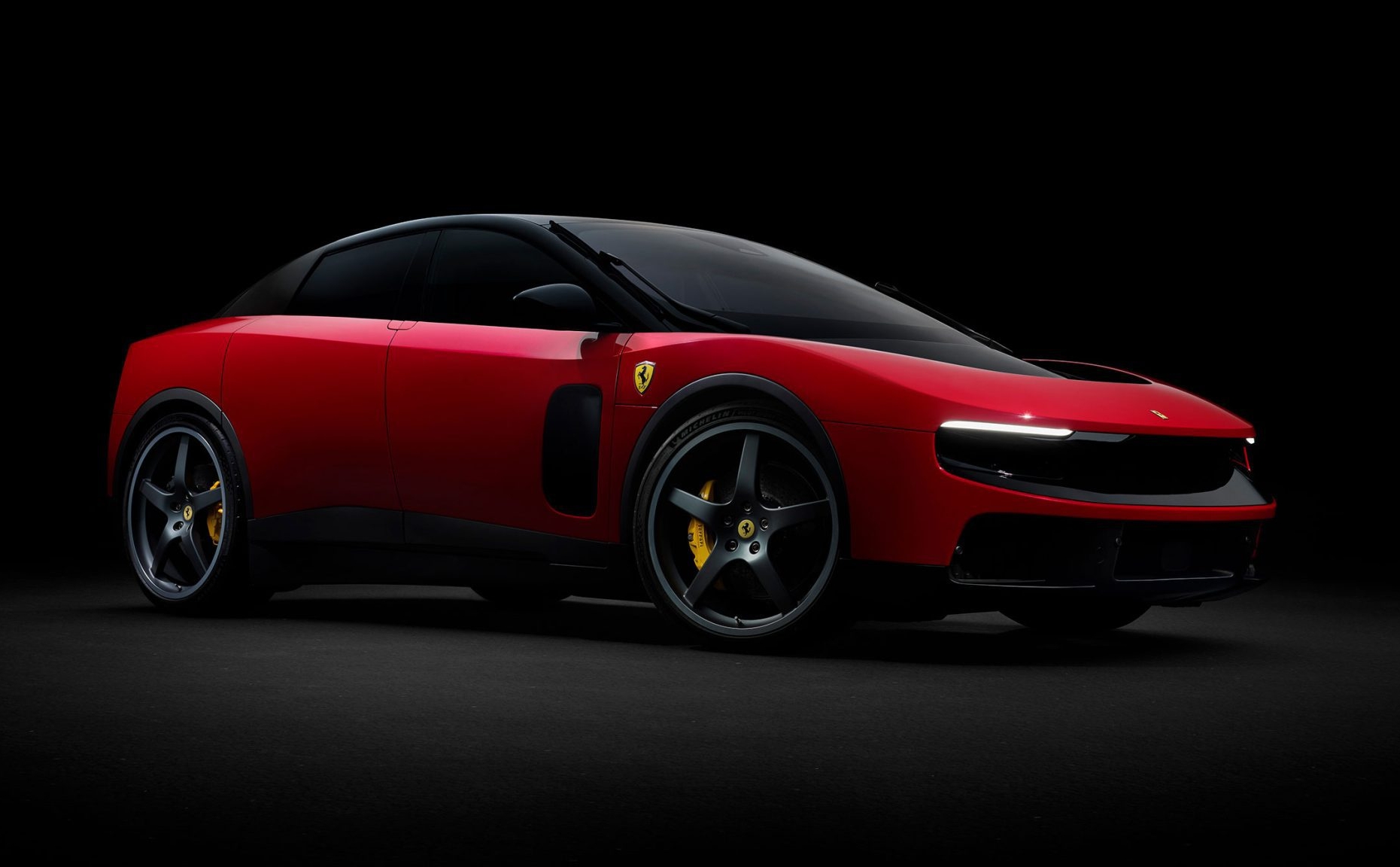
Ferrari has officially unveiled the Luce, the brand’s first fully electric production vehicle and one of the most ambitious projects in its history. Revealed in Rome, the new model represents a collaboration between Ferrari and LoveFrom, the design studio founded by Jony Ive and Marc Newson, bringing together automotive engineering and industrial design at an unprecedented scale.
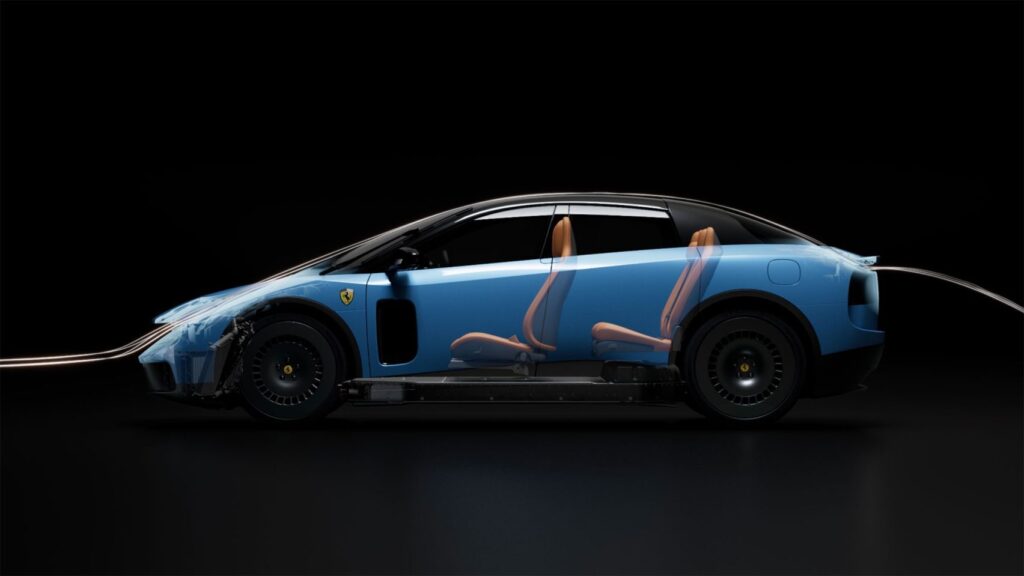
Rather than following the visual language of existing electric vehicles, the Luce introduces an entirely new architectural approach. At the heart of the design is a sweeping glass enclosure that defines the passenger compartment, wrapped within a sculpted aluminum body shell. This layered composition creates the impression of a transparent volume floating inside a streamlined metallic form, allowing the cabin and exterior to coexist as distinct yet interconnected elements.
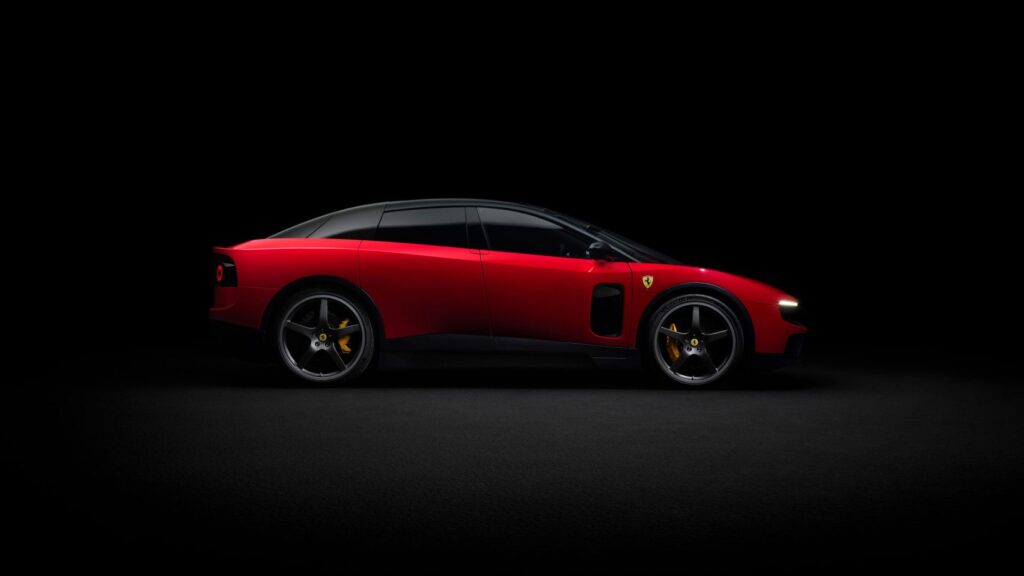
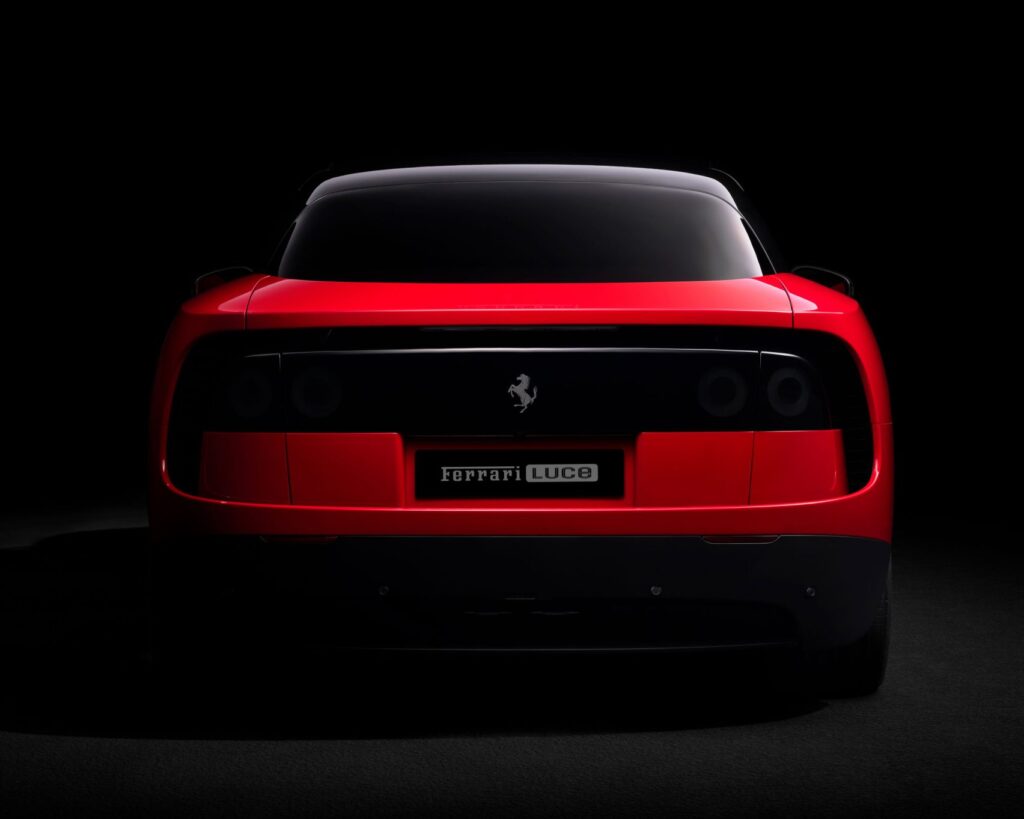
Aerodynamics played a decisive role throughout the development process. The vehicle’s silhouette is shaped to minimize drag and maximize efficiency, helping extract the greatest possible range from its 122-kWh battery system. Wide integrated wings, carefully sculpted surfaces, and an exceptionally smooth underbody contribute to a drag coefficient of just 0.254, the lowest ever achieved by a Ferrari road car.
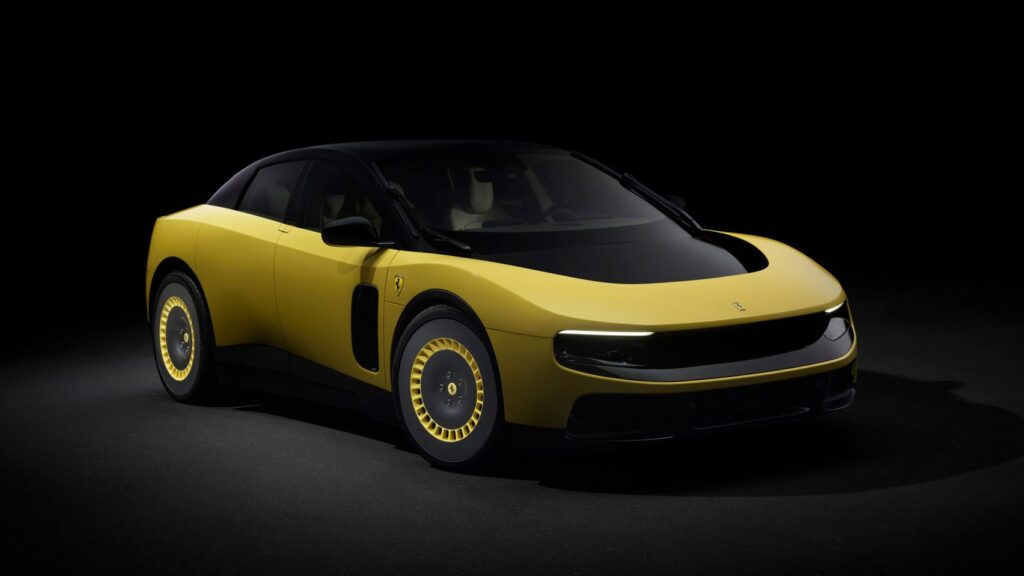
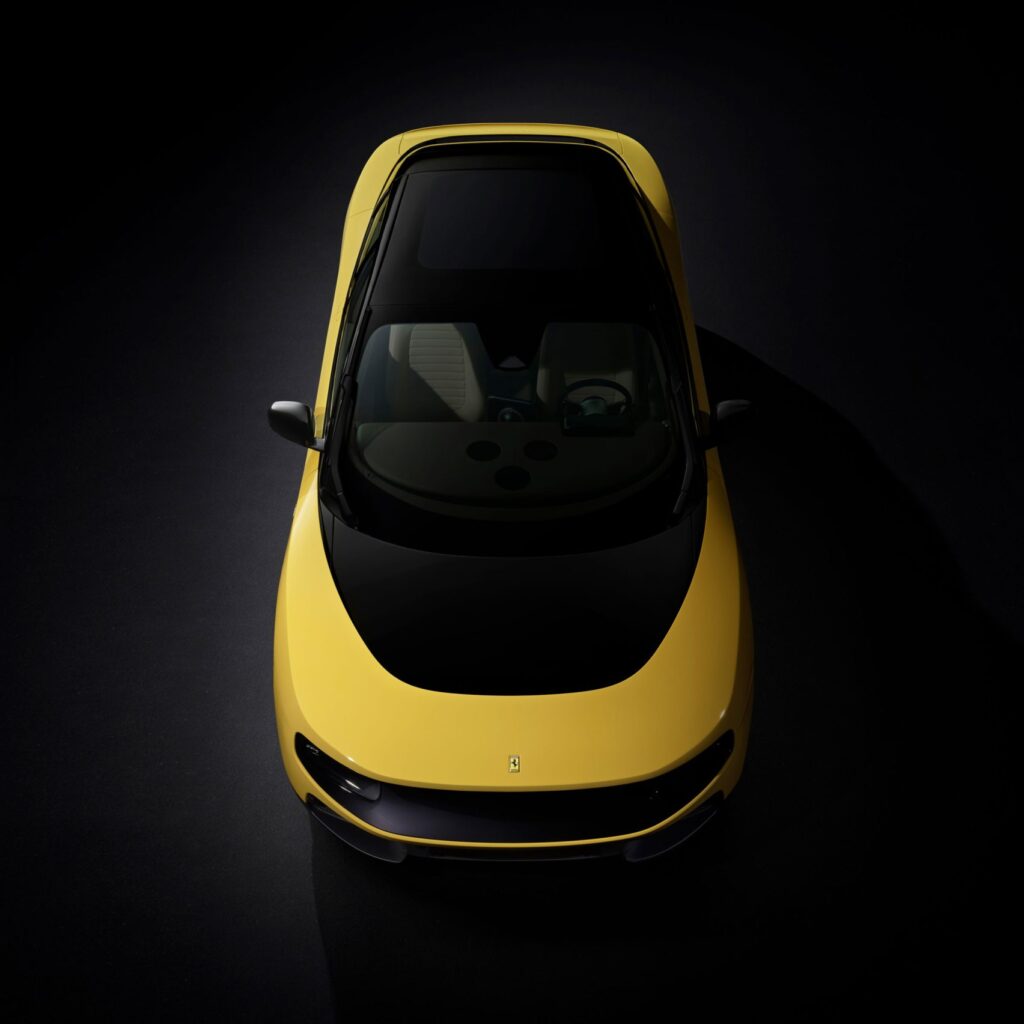
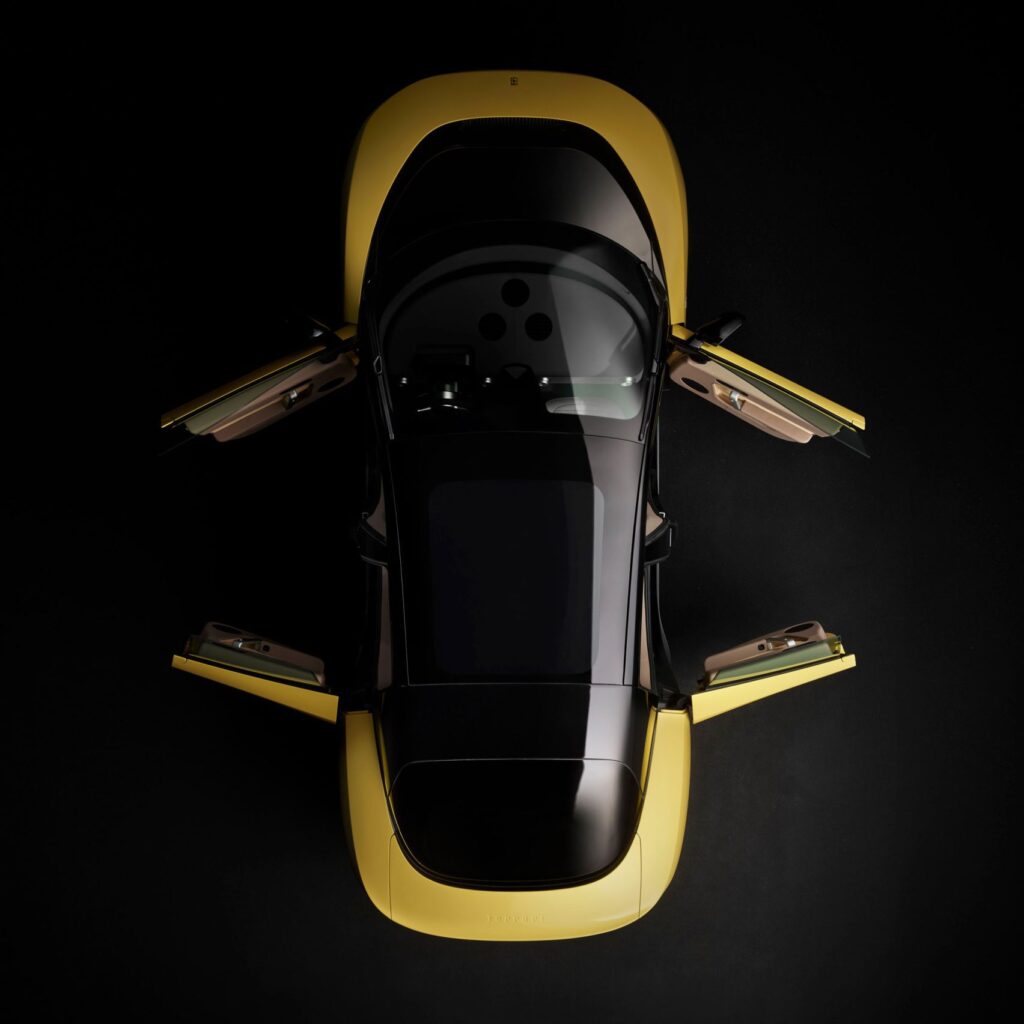
The absence of a traditional combustion engine allowed designers to radically rethink the front of the vehicle. The windshield extends further forward than on conventional cars, flowing seamlessly into a glossy black panel that forms a sharply tapered nose. Active aerodynamic components manage airflow across the body, while hidden engineering solutions, including vertically positioned windshield wipers, preserve the purity of the form.
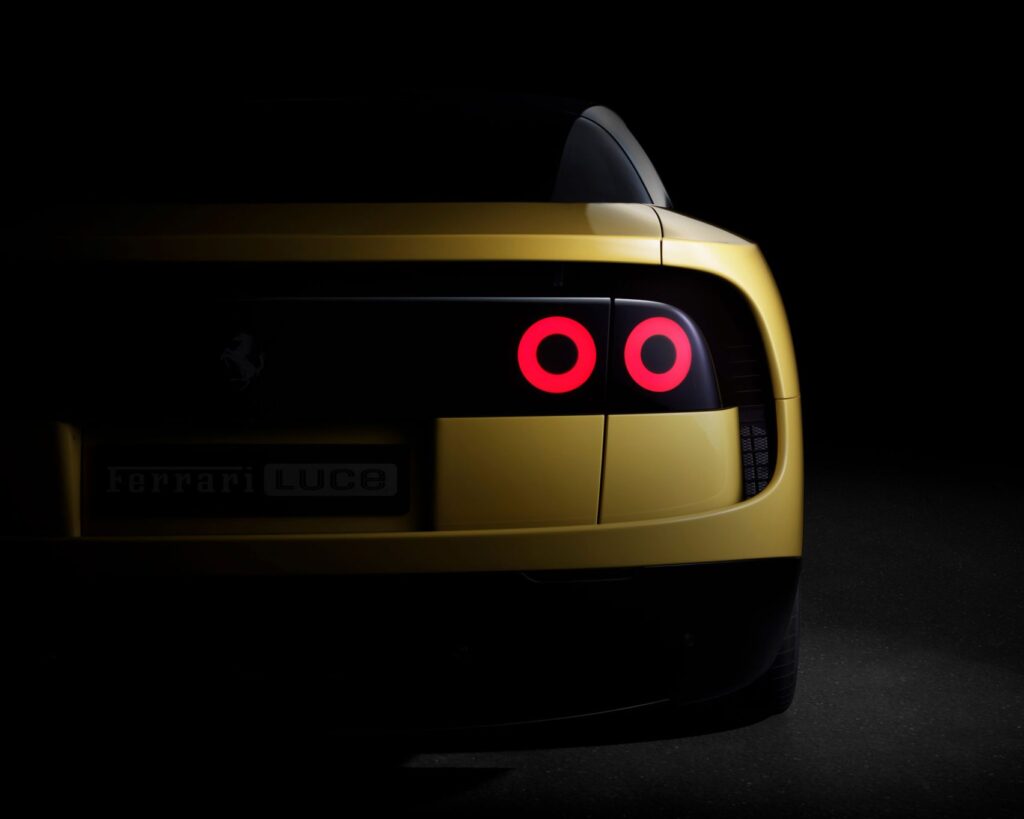
Performance remains unmistakably Ferrari. Powered by four electric motors, one at each wheel, the Luce delivers up to 990 Nm of torque. Ferrari claims a sprint from 0 to 100 km/h in just 2.5 seconds, while top speed exceeds 310 km/h. Advanced torque-vectoring systems and four-wheel steering are designed to ensure the car retains the agility and driver engagement associated with the marque despite its size and weight.
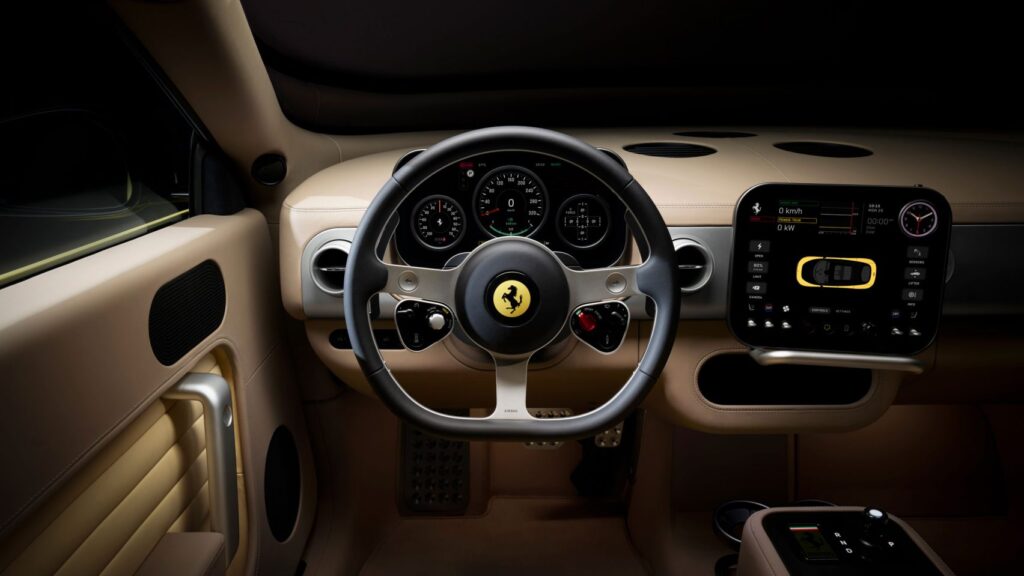
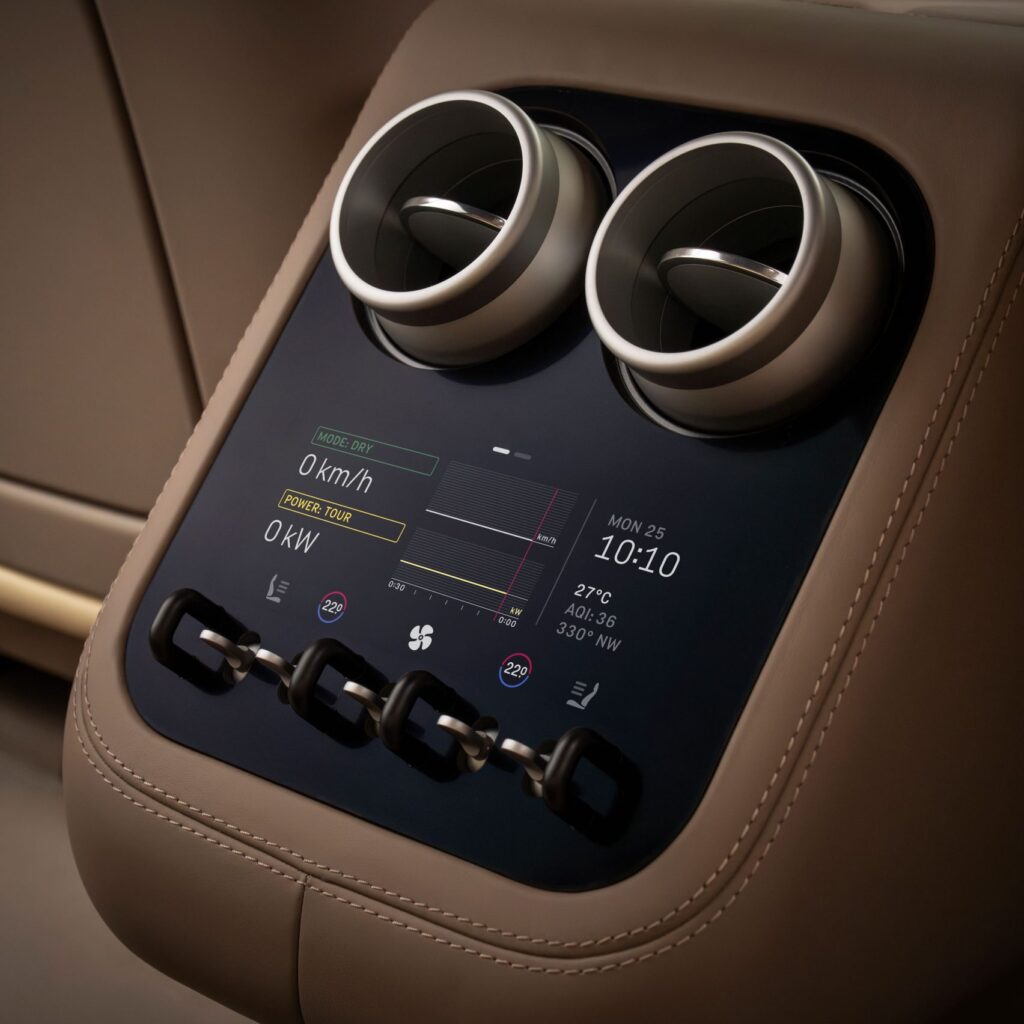
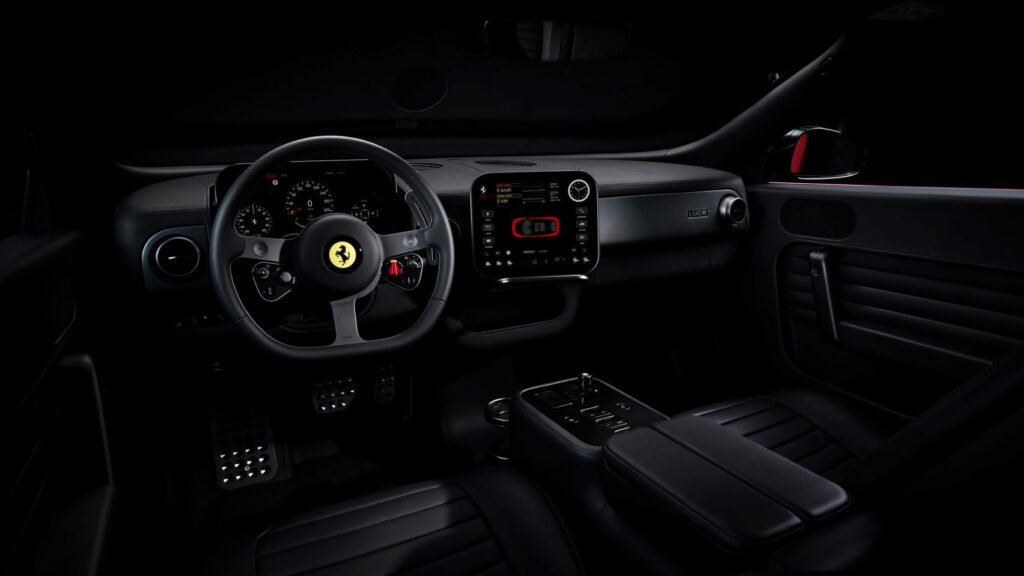
The interior departs from many contemporary EV trends by prioritizing tactile interaction over touchscreen dependency. Physical switches, precision-machined aluminum controls, glass details, and mechanical interfaces dominate the cabin. Even the instrument display combines digital OLED technology with moving physical elements, creating an experience that feels more mechanical and crafted than purely digital.
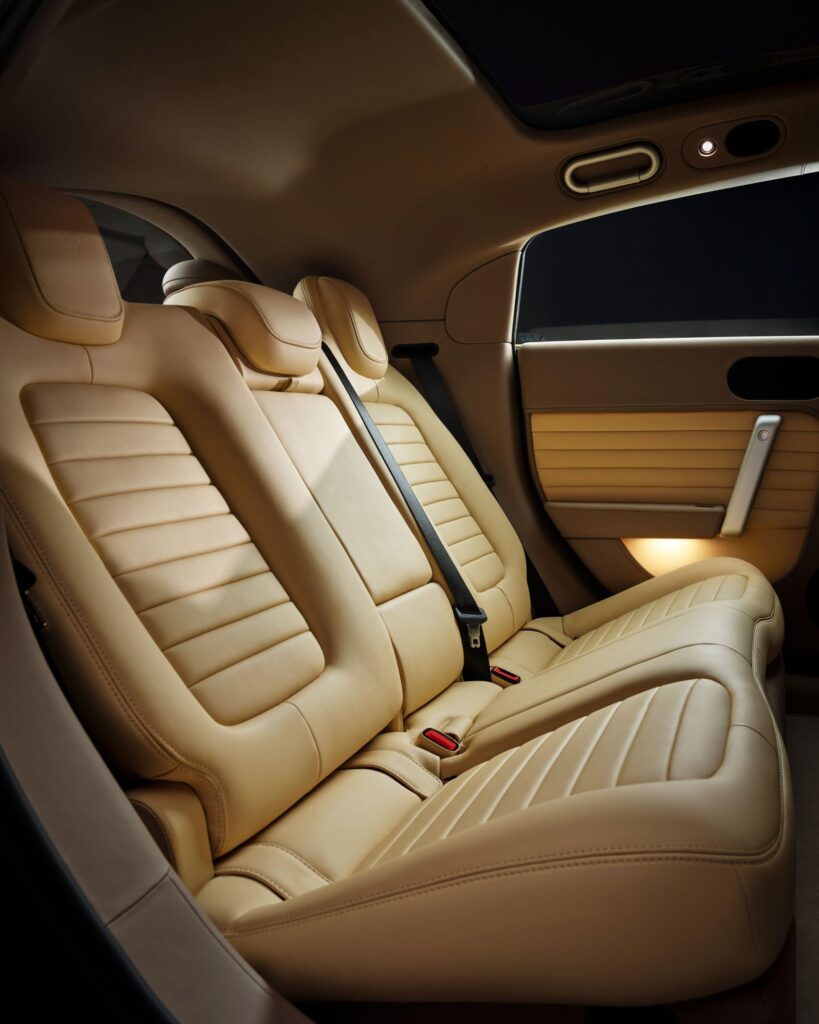
One of the project’s most significant milestones is its practicality. The Luce is not only Ferrari’s first electric vehicle but also the company’s first five-seat model. Stretching beyond five meters in length, it offers generous interior space, a large luggage compartment, and a more versatile layout without abandoning the performance-oriented character expected from the Italian manufacturer.
The vehicle also introduces a unique acoustic strategy. Rather than generating entirely artificial sounds, Ferrari amplifies the natural vibrations produced by the electric drivetrain, creating an audio experience intended to maintain the emotional connection traditionally associated with high-performance driving.
Developed over five years, the project generated more than sixty new patents and reflects Ferrari’s broader ambition to define its own path into electrification. While many luxury brands are adapting existing formulas for the electric age, the Luce represents a ground-up rethinking of what a Ferrari can be.
Blending advanced aerodynamics, innovative engineering, and a distinctly architectural approach to design, the Luce signals the beginning of a new chapter for the legendary Italian manufacturer, one where electric performance and emotional engagement are no longer seen as opposites, but as complementary parts of the same experience.
Follow Ferrari on: Website / Facebook / Instagram
Photos by Ferrari
