
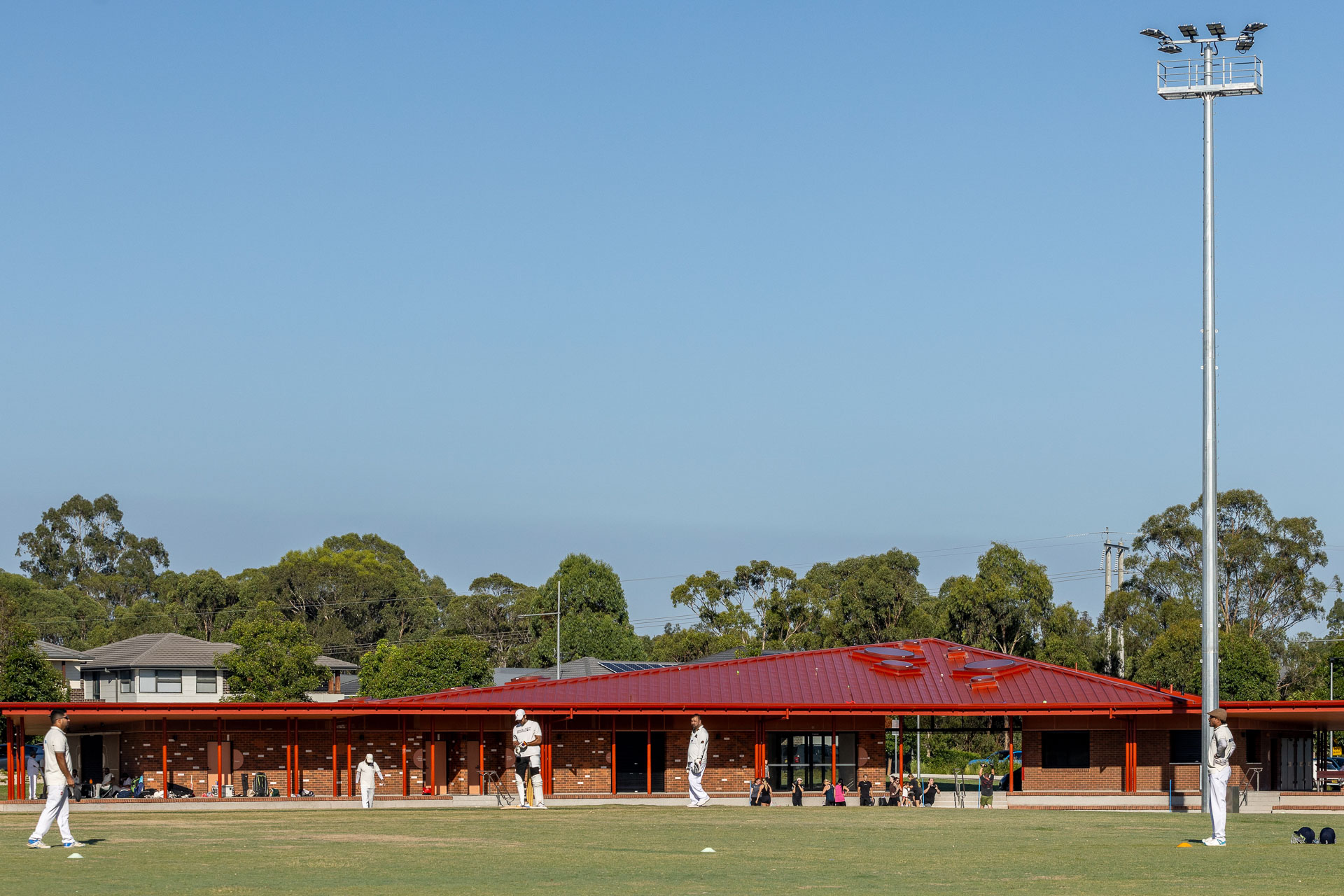
Sam Crawford Architects have completed a new sports pavilion within the Willowdale sports ground in Denham Court, a fast-growing suburb on Sydney’s western edge near the international airport. Set within a 5.5-hectare community field surrounded by detached housing, the project sits at a point where contemporary suburban development meets a landscape that has been used by Indigenous communities for up to 10,000 years.
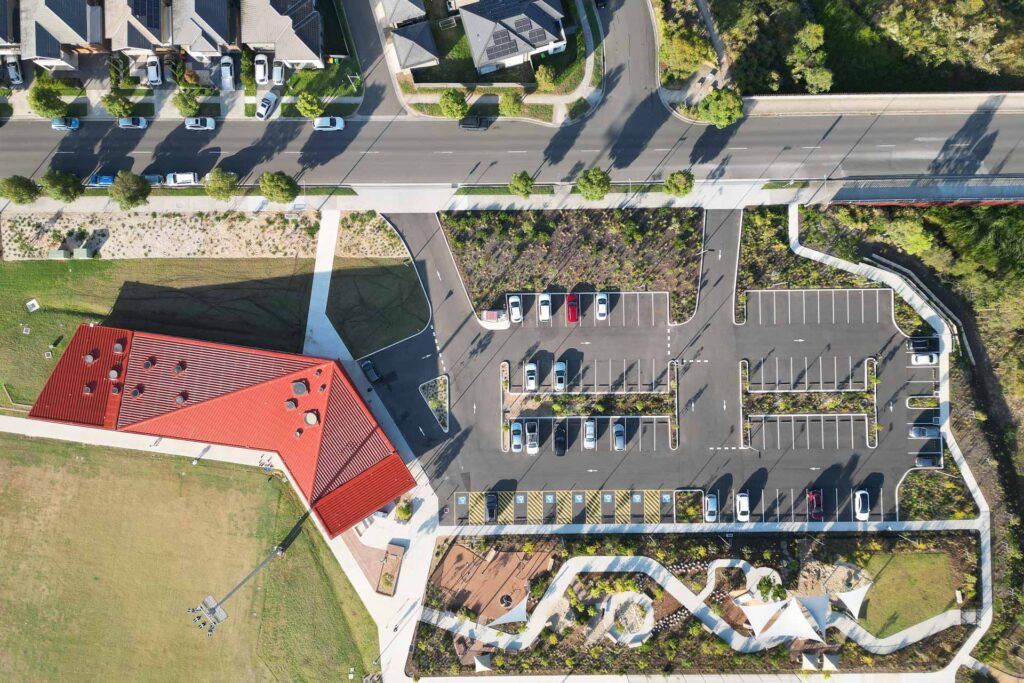
The pavilion forms part of a wider recreational precinct that includes picnic areas, a playground, parking and training fields used by nearby schools. Beyond its sporting role, the building is conceived as a local gathering point, an everyday civic space that reflects both present-day community life and the deep history of the land it occupies.
In the north-eastern corner of the site, the new structure draws on references from Dharawal and Darug culture, incorporating motifs inspired by clay oven beads traditionally found in earth ovens. These influences are translated into architectural details that run through the design, linking material choices and spatial experience to the site’s Indigenous heritage.
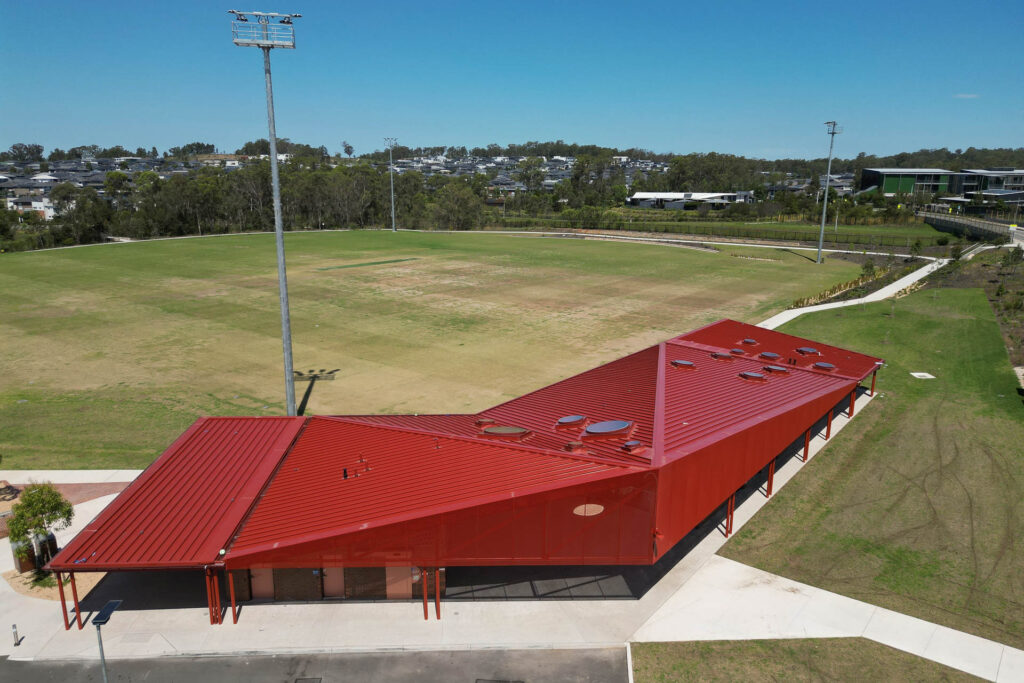
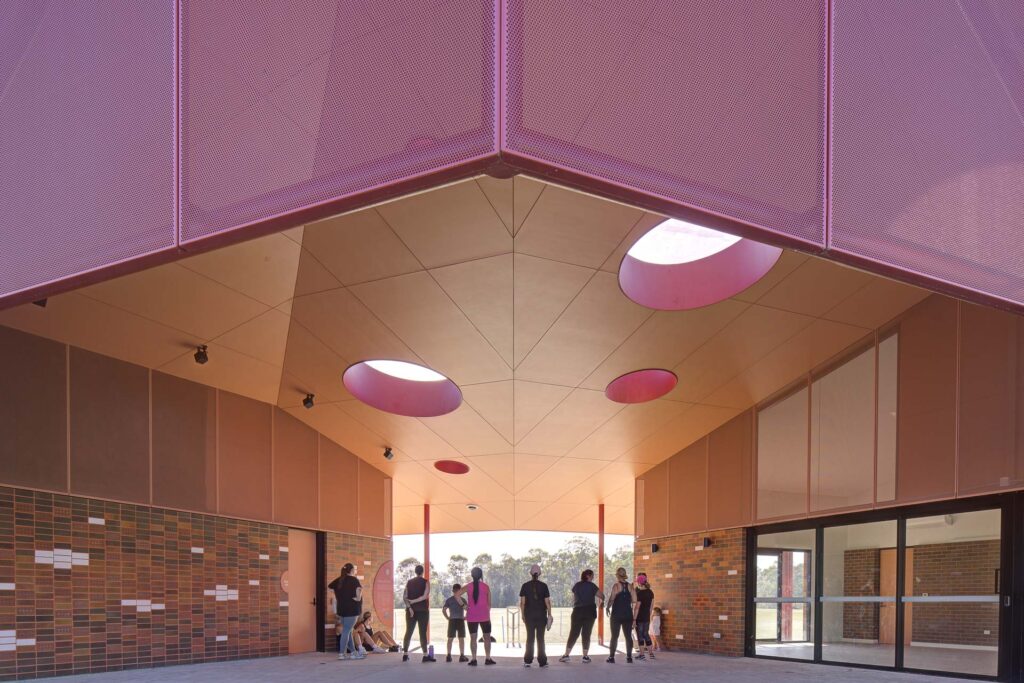
Facing the main playing field, a series of wide concrete terraces with deep red tile inlays provide informal spectator seating. From here, visitors watch rugby matches and community games unfold across the grass, while children move freely through the open landscape. Above, long cantilevered canopies, supported by irregularly spaced columns in a muted red tone, offer shade from the harsh Australian sun.
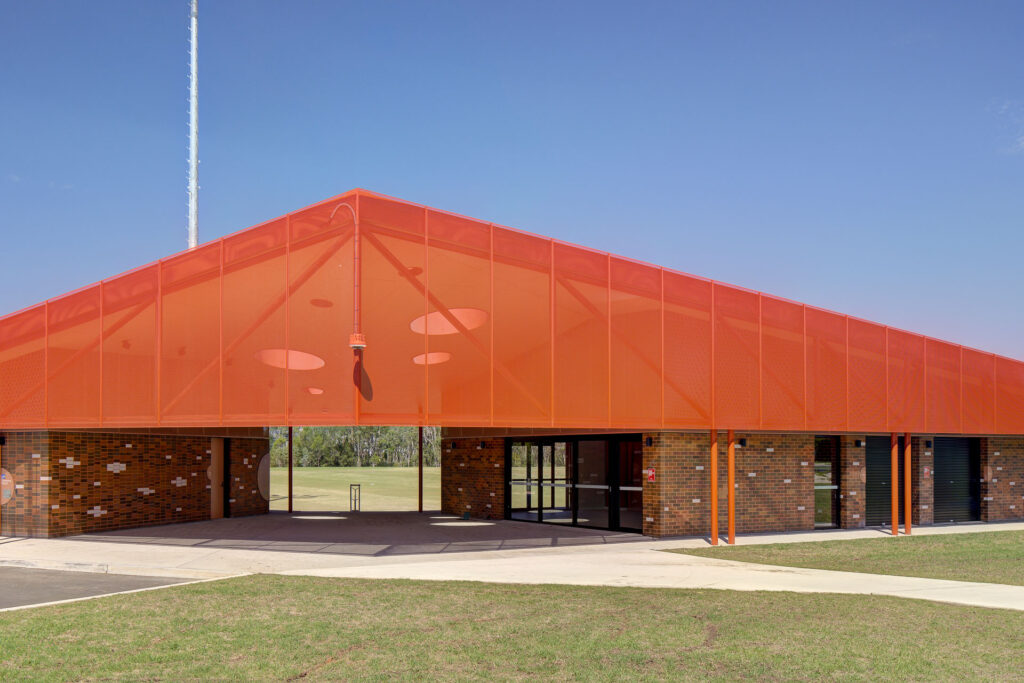
Circular roof openings puncture the canopy, echoing the form of traditional clay elements and casting shifting patterned shadows across the concrete walkways below. From the street, the roofline reads as a familiar suburban gable, while from above its undulating corrugated form recalls early agricultural structures introduced by European settlers. Behind perforated metal screens, the lightweight steel framework and tapered building volumes remain partially visible, creating a layered reading of solidity and transparency.
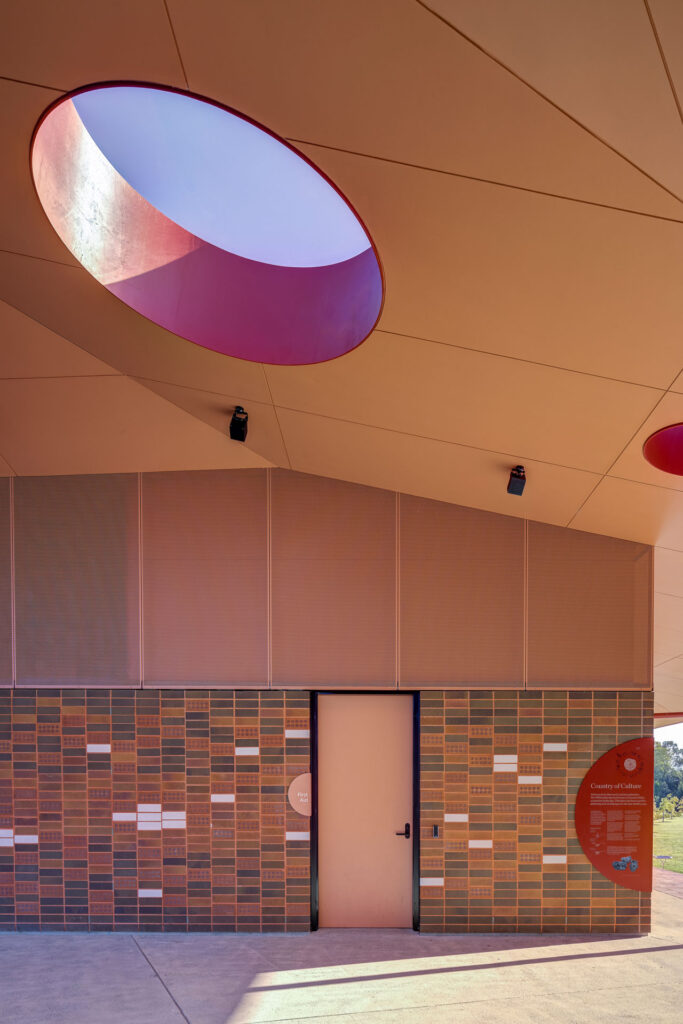
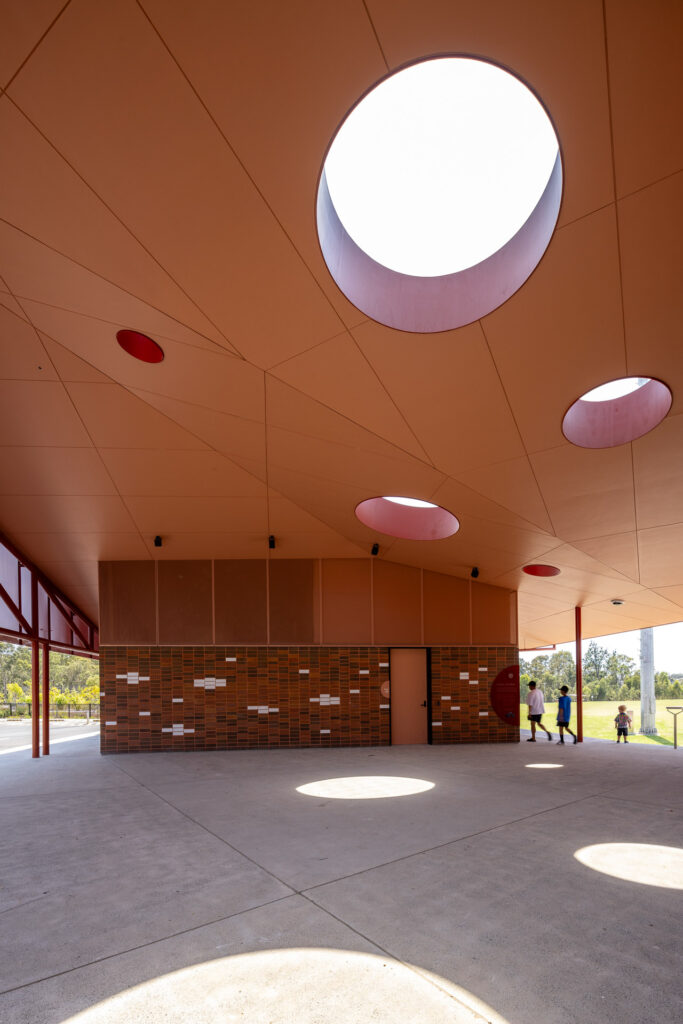
Working with artists from Lymesmith, the V-shaped brick façade becomes a key expressive surface of the project. Its palette of earthy browns, whites and reds references fire, ash and clay, while specially perforated bricks subtly allude to the small clay spheres that inspired the design. The result is a façade that functions both as envelope and artwork, embedding narrative directly into the building’s material skin.
The pavilion is organised into two main volumes. One contains a clubroom, changing facilities and toilets, while a second, smaller building accommodates an office with first-aid provisions, storage spaces and a kiosk, alongside a barbecue area that supports informal community use.
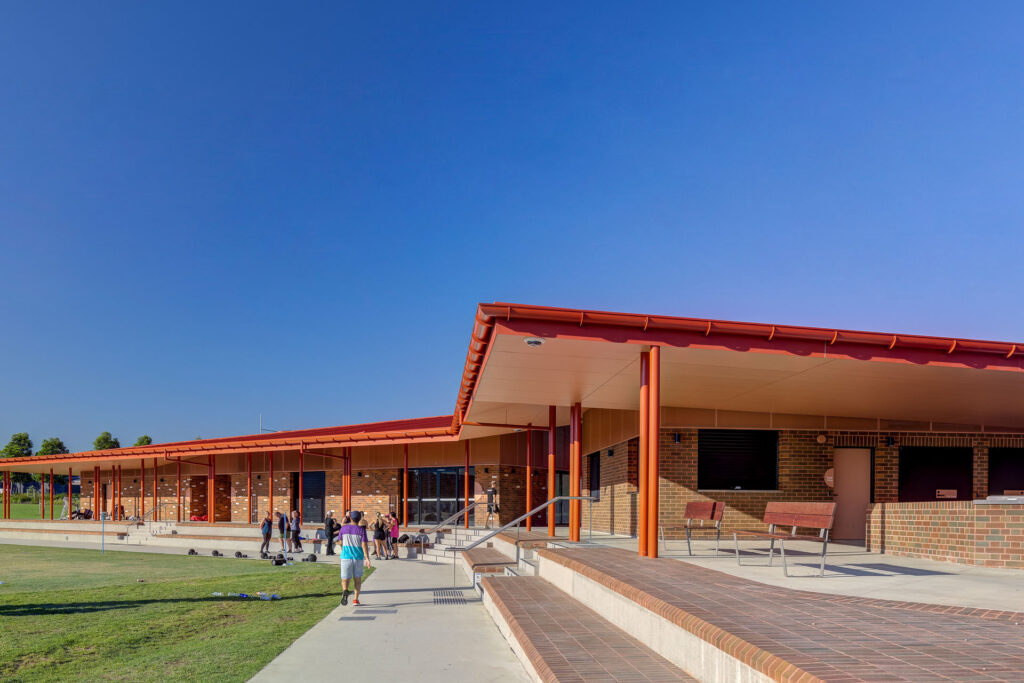
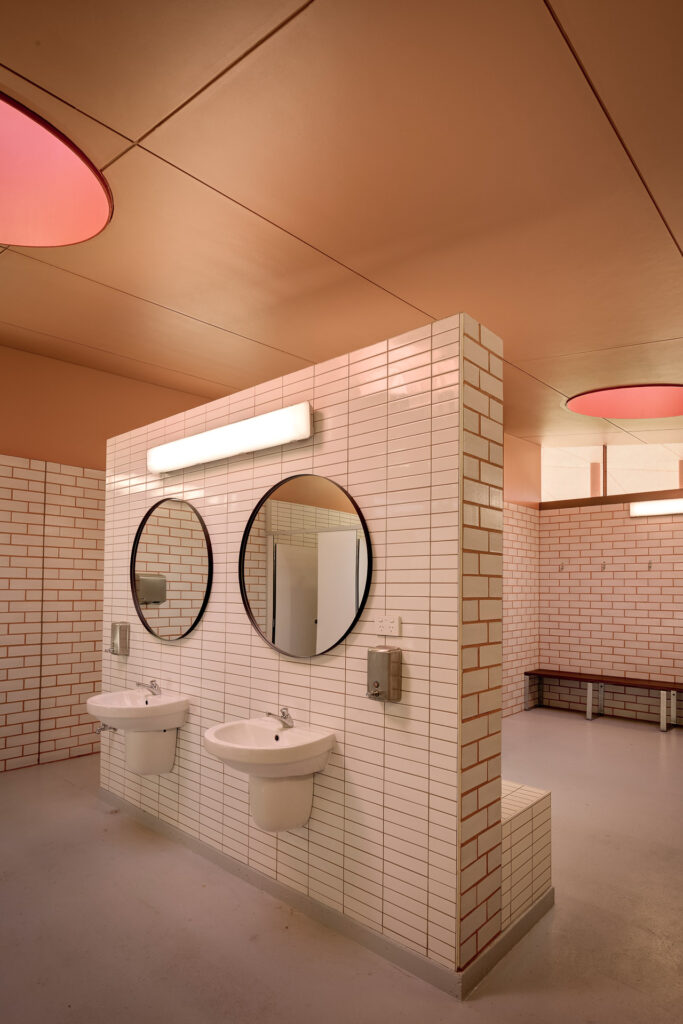
Environmental performance is integrated throughout the design. Walls stop short of the ceiling to enable natural cross-ventilation, while circular rooflights bring daylight deep into the interior. High-performance wool insulation helps regulate temperature year-round, and rainwater is collected and reused through efficient building systems.
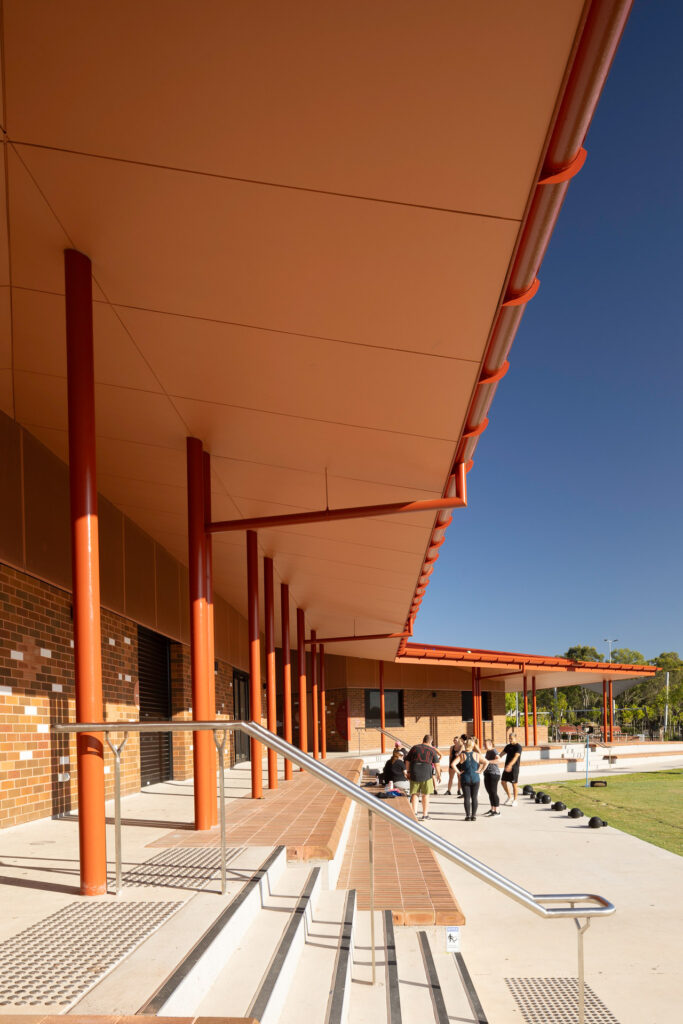
More than a sports facility, the pavilion acts as a social anchor for the Willowdale community. By embedding references to thousands of years of Indigenous culture within a contemporary public building, Sam Crawford Architects create a space that connects sport, landscape and memory within a single civic framework.
Follow Sam Crawford Architects on: Website / Instagram
Photo by Brett Boardman
